
Looking into a trip to the Middle East? Jordan is not only the safest country of the Middle East, but also an absolute gem when it comes to independent tourism. Make you sure know where is what, when you plan your route through Jordan.
Once in Jordan, there is no way around visiting the Wadi Rum desert. Wadi Rum is not only a desert with amazing jeep tours and hiking trails, but also the literal mars on earth. Make yourself familiar with the Wadi Rum map and find out what the best spots for your one day itinerary are.
| Wadi Rum (Jordan) On A Map: |
| Jordan is a country located in the heart of the Middle East. Wadi Rum is located in Southern Jordan. Wadi Rum is marked by the Wadi Rum Protected Area. |


Into the Desert.
Dive deep into Jordan’s most impressive geographical marvel: Wadi Rum. Explore red sand dunes, sandstone arches and the numerous remnants of human civilisation in the desert.
- Into the Desert.
- Jordan on the Map of the Middle East
- Wadi Rum on the Map of Jordan
- The Wadi Rum Protected Area
- Wadi Rum Map – Places to Know
- Stay in Wadi Rum – Sleep in a Desert Camp
- FAQ
Jordan on the Map of the Middle East
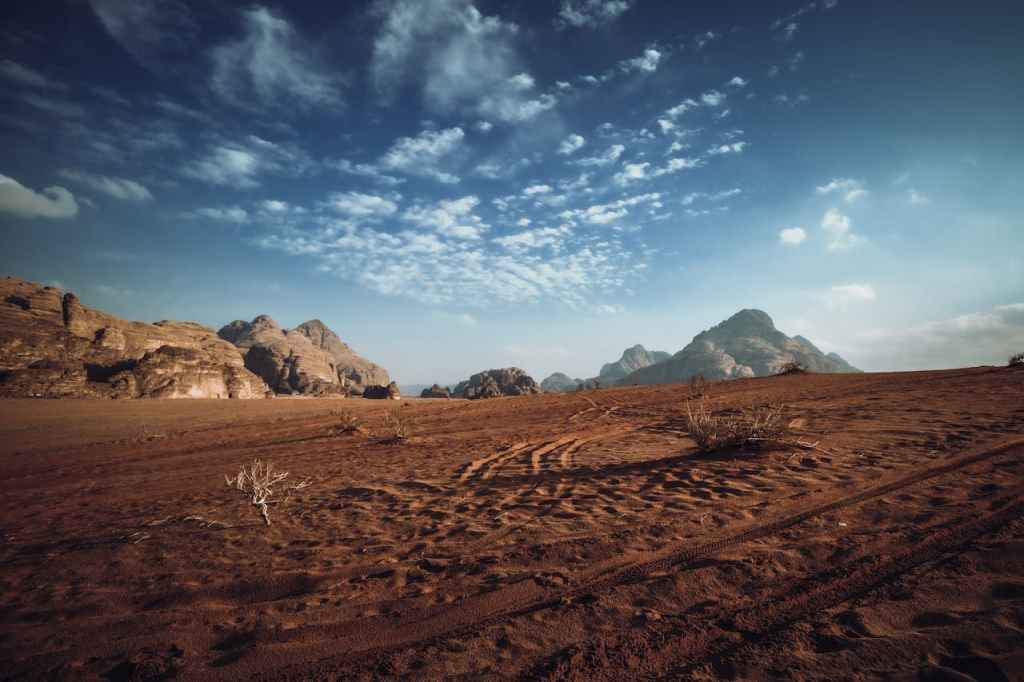
Jordan is a relatively small country located in the heart of the Middle East. It borders Israel and Palestine in the West, Syria in the North as well as Iraq and Saudi-Arabia in the East and South.
Besides the iconic Jordan river, Jordan has access to two more bodies of water: the Dead Sea in the West and the Red Sea in the South on the Gulf of Aqaba. Otherwise, it is mostly covered by deserts such as the Wadi Rum desert.
Jordan stretches approximately 90.000 square kilometres (35,000 square miles) and houses around 11.5 million residents. Most of the Jordanians live in the big cities of the North such as Amman, Irbid and Zarqa.
Places like Wadi Musa (Petra), Aqaba on the Red Sea and the Wadi Rum desert are also heavily frequented by domestic and international tourists. Wadi Rum itself is only inhabited by a couple of thousand Bedouins.

Wadi Rum on the Map of Jordan
Wadi Rum is the Arabic word for the “Valley of High Places”. On a map of Jordan, you will find the Wadi Rum Protected Area in the far South.
Wadi Rum is a designated area in Southern Jordan, that lays nestled between the Aqaba province, the Saudi-Arabian border and the Jafr Sub-District in the East. It has been recognised by the UNESCO as such in the year 2011.
Wadi Rum is reachable from the North via the Jordan Valley Highway and the Desert Highway. You will be heading to Wadi Rum on one of these highways, if your arrive from Queen Alia International Airport.
Tourists arriving to Jordan through Aqaba International Airport are a lot closer to Wadi Rum from the get-to. From Aqaba, only another 70 kilometres or one hour by car separate you from Wadi Rum Village, the main hub of the desert area.
The Wadi Rum Protected Area

The Wadi Rum Protected Area in its modern form exists since its first constitution in 1997. Its management as a Protected Area is aimed at conserving not only the natural value of the desert, but also its cultural value as a habitat of the Bedouins.
Wadi Rum was first settled well over 10,000 years ago. Up until today, it has been home to a number of distinct civilisations. The Nabataean peoples left some of the most fascinating traces including petroglyphs and inscriptions in the desert. Those same people went on to build the ancient stone city of Petra further North.
Today, the Wadi Rum desert is primarily inhabited by local Bedouin tribes, that used to live in and around Wadi Rum for many centuries.
The majority of the Bedouin community has adapted a semi-settled lifestyle and heavily relies on tourism today. Bedouins offer guided tours, camping, hiking and climbing experiences to hundreds of thousands of tourists every year.
Wadi Rum Map – Places to Know

Looking at the Wadi Rum map, there is a number of notable places to be aware of on journey down South towards the heart of the Wadi Rum Desert. Even before officially entering the Wadi Rum Protected Area, there is already a few sights worth noting.
Enjoy a live-performance of Lawrence of Arabia attacking the Hejaz Railway at the Old Railway Station. Jordan Pass owners get to witness this spectacle for free – yes, you pay not a single cent for your entrance.
As you drive deeper into Wadi Rum, you will also be able to witness the Seven Pillars of Wisdom. The Seven Pillars of Wadi Rum pay homage to Lawrence’s acclaimed book. Look to the left on your drive towards the Wadi Rum Visitor Center to witness the imposing stone formation.
Wadi Rum Visitor Center
Before you can enter the actual Protected Area, you will have to make a mandatory stop at the so-called Wadi Rum Visitor Center. Pay the entrance fee to the desert here.
It is 5 JD per person, with free entrance for kids under 12. If you intend to enter the desert with you private car, antlers 25 JD will be charged. Note that Jordan Pass owners do not have to pay an extra fee for the entrance to the Wadi Rum desert.
The Wadi Rum Visitor also offers plenty of tourist information regarding camps, jeep tours and other activities in the area. Ask questions, book accommodation and get a Wadi Rum map here for easier navigation.
It is also worth noting, that the Wadi Rum Visitor Center is the last place with an ATM before the desert. So, if you are planning to carry cash, make your withdrawals here.
Wadi Rum Village
Once you have arrived to Wadi Rum Village itself, you will most probably be asked by your hosts to meet that at Wadi Rum Rest House.
This is the official destination of buses and taxis alike. Wadi Rum Rest House provides free parking to every visitor of the Protected Area and serves as a meeting point for tourists and Bedouins.

Make your shopping in Wadi Rum Village as it is the last place to do so. Stock up on drinks and snacks, visit a restaurant for lunch and get your laundry taken care of in a laundry salon before heading deeper into the desert.
Depending on your phone provider and the location of your desert camp, the village will also be the last place with a reliable internet connection. So make sure, to send any texts and complete any Google searches from here.
Wadi Rum Desert Sights
Beyond Wadi Rum Village, you will have the unique opportunity to get to know the wonders of the Wadi Rum desert. One look at the Wadi Rum map will reveal to you, that the numerous sights are sprawled out all throughout the desert.
Therefore, we recommend you book a Full Day Tour of the desert, to make the most of your time there.
Desert tours packages usually include the following sights: Nabataean Temple, Lawrence‘s Spring, Al-Khazali Canyon, Small Red Dune, Small Rock Bridge, Lawrence‘s House, Mushroom Rock, Burdah Rock Bridge, Abu Khashaba Canyon (Short Hike), Sand-Boarding, Umm Froth Rock Bridge and a sunset in the White Desert.

Even more sights can be reached via hiking and climbing. Embark on one of the many hiking trails, scaling the mountain of Jebel Umm Ad Dami or the Jebel Al Hash.
Test your strength on a combination of hiking and climbing while you make your way to the top of Jebel Burdah Rock Bridge. To explore parts of the region, that not even every local has seen, consider accepting the challenge of the Wadi Rum Trail.
The Wadi Rum Trail is the longest of the hiking trails in the desert and takes you deep into the desert where only few Bedouins live and camels venture.
Completing the Wadi Rum Trail takes about a week and is usually done with the help of a local guide. Due to the local climate, completing this trail is only advised in the spring and after October.
Stay in Wadi Rum – Sleep in a Desert Camp

By far the best choice for staying in Wadi Rum is a Bedouin tent in the desert. Tents are available in a number of desert camps that have been build with Bedouin history in mind.
The traditional-style tents offer a refuge from the heat of the day and the cold of the night, while providing for a good night’s sleep.
Book accommodation, (group) tours and other activities such as transportation and camel rides, directed with the locals on a website of one specific camp.
Communicate directly with the Bedouins to create your ideal experiences, dive into Bedouin life and enjoy their amazing food before sleeping under the stars in the middle of the Wadi Rum desert.
FAQ
What country is Wadi Rum Jordan in?
Wadi Rum is located in the Hashemite Kingdom of Jordan. Jordan is a country located in the Middle East. On a map, Wadi Rum is located in Southern Jordan. The Wadi Rum desert is nestled between the Aqaba and Jafr Districts as well as the Saudi-Arabian border.
How do I get to Wadi Rum Jordan?
Getting to Wadi Rum from other big cities such as Amman, Petra and Aqaba is possible via several modes of road transport. Consider renting a car for more flexibility, order a taxi for more safety or opt for a bus to save money on transportation costs.
What is the closest town to Wadi Rum?
The closest settlement outside of the Wadi Rum Protected Area is identified on a map as Aqaba. Aqaba is a port city in the shores of the Gulf of Aqaba and a popular destination for diving. Within the Wadi Rum desert, the largest settlement is the so-called Wadi Rum Village.
Is the Wadi Rum in Petra?
While Petra is located close to the modern town of Wadi Musa in the center of Jordan, Wadi Rum is located in the South of Jordan. Looking at the map, however, you will find out that Wadi Rum is easily connected to Petra and vice versa through a desert highway.
What is so special about Wadi Rum?
The combination of mountains and valley, sand and sandstone and history and culture, makes Wadi Rum one of the most unique places in the modern world. The Wadi Rum desert is home to amazing natural sights, historic remnants of millennia and a landscape that has served as a scene for many movies already.

 waditribe.com