
“Wadi Rum was a place of unforgettable beauty, where the sky over the red-burning sand blazed with unrelenting colors and the rocks stood like the teeth of a vast monster rearing up from the ground.”

T. E. Lawrence of Arabia and the desert of Wadi Rum are deeply intertwined in the history of the 20th century. If not before, since the 1962 Hollywood drama “Lawrence of Arabia, Lawrence and Wadi Rum go together.
But why is a Brit so famous for his time in Jordan and what has the Arab Revolt got to do with it? And what is left of this thrilling history today? Let us fill you in on the history of T. E. Lawrence of Arabia.
| 4 Places in Wadi Rum Connected to Lawrence of Arabia: |
| 1. The Seven Pillars of Wisdom: Mountain formation named after Lawrence’s book. 2. Lawrence’s Spring: Ancient Nabataean spring rediscovered by the British officer. 3. Lawrence’s House: Ancient Nabataean ruins inhabited by Lawrence in 1917. 4. Siq Umm Al Tawaqi: Rock art in honor of Lawrence of Arabia. |
Discover the History of Wadi Rum.
From the Arab Revolt during the First World War and the ancient Nabataean civilisation, Wadi Rum holds countless historical treasures. Come and see for yourself!
- Discover the History of Wadi Rum.
- Thomas Edward Lawrence of Arabia in the Wadi Rum Desert – The History
- Hollywood & Lawrence of Arabia – The Movie
- What is left of Lawrence of Arabia today
- How You Can Explore the Story of Lawrence of Arabia Today
- FAQs
Thomas Edward Lawrence of Arabia in the Wadi Rum Desert – The History

Thomas Edward Lawrence of Arabia was a British army officer, archeologist and author. In his times, he made a name of himself for his involvement with the Arab Revolt.
The early 20th century was a time of turmoil in the Middle East with the Ottoman Empire losing its grip on the region and the colonial powers of Britain and France aggressive pursuing their interests. The Arab Revolt movement pushed for the liberation of the Arabs from the Ottoman Empire.
T. E. Lawrence heavily supported a British alliance with the Arabs, partly in his best interest for his country, partly because of his special bond with the Arab world, which he became famous for. As the First World War raged on, Lawrence was actively involved in the Arab Revolt taking place in Wadi Rum among other places.
Together with the Bedouin tribes of Rum, among them the Zalabiah tribe, and neighbouring allies, Lawrence fought a Guerilla-style war against the Ottoman army, attacking strategic positions and bombing the nearby Hejaz Railway. The Wadi Rum desert served as a safe place for the fighters and Lawrence with the Brit calling it home for at least a few months.
Eventually, T. E. Lawrence returned to Britain, becoming increasingly frustrated with the British political line in the region. His actions were often pushed back against in Britain and earned him a bad reputation in rivalling France, whereas in Wadi Rum and the neighbouring region he is remembered as a freedom fighter.
In Middle Eastern history, Lawrence stands out as one of the only Western agents in the Middle East to actively engage with locals, wear their dress and speak their language, making headlines around the world for it. Ultimately, Lawrence passed away in Britain in the spring of 1935.
Did Lawrence of Arabia actually live in Wadi Rum?
While Lawrence of Arabia must have spent quite some time in Wadi Rum, it is disputed, if he ever really lived there. Current consensus leads us to believe that Lawrence retreated to Wadi Rum for some months during his time as a British military officer in the region.
After retiring from service and returning to Britain, Lawrence described his time in Wadi Rum in the book “The Seven Pillars of Wisdom”: “Life in Wadi Rum was a trial for body and spirit, a constant struggle with the merciless environment that revealed both its beauty and its terrors.”
Hollywood & Lawrence of Arabia – The Movie
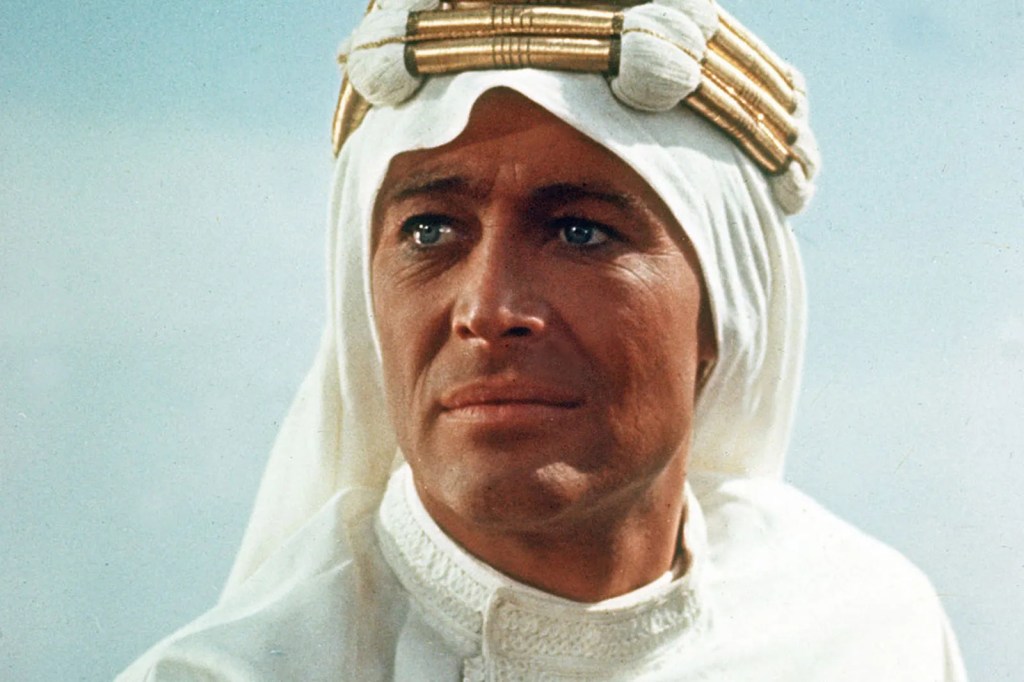
T. E. Lawrence of Arabia was already a famous character during his lifetime. A Brit dressed in Bedouin attire was a sure sell for newsletter article at time, quickly earning him the title “Lawrence of Arabia”. His rise to immortality came, however, when his story was creatively adapted in the Hollywood drama Lawrence of Arabia.
The 1962 movie adaption of Lawrence’s life was written on the basis of Lawrence’s own description of Wadi Rum and the Arab Revolt in his “Seven Pillars of Wisdom”. The movie was directed by David Lean. In the movie, the character of Lawrence is represented by Peter O’Toole.
The movie reached global success and won a grand total of seven Oscars. Among others, the movie was given the title of the Best Movie. To this day, “Lawrence of Arabia” is considered one of the best movies of all time and a trailblazer for the historical drama genre.
Was Lawrence of Arabia filmed in Wadi Rum?

Many scenes of “Lawrence of Arabia” were filmed in the Wadi Rum desert, including the famous scene of Lawrence’s camel ride in the desert. In the movie, you can find many of the characteristic sand dunes and sandstone rock formations of the desert.
The filming of “Lawrence of Arabia” in the Wadi Rum desert helped popularise the desert globally and made it a popular tourist attraction. In the decades that followed, many more Hollywood movies were filmed in Wadi Rum. Nowadays, millions of tourists visit Wadi Rum every year to discover the original filming locations of the movie.
What is left of Lawrence of Arabia today
There is several Wadi Rum sites today, that are connected to the stories about Lawrence of Arabia in one way or another. While it is difficult to treat them a legitimate historical sites, they offer an intruiguing glimpse into the deep connection of Lawrence of Arabia and the Wadi Rum desert.
These are the remnants of Lawrence of Arabia in the Wadi Rum desert:
The Seven Pillars of Wisdom

On your drive to Wadi Rum Village shortly after the Wadi Rum Visitor Center, you will already see one of the first sights of Wadi Rum that are connected to the story of Lawrence of Arabia. The so-called Seven Pillars of Wisdom were named after Lawrence’s book about his time in the Middle East.
The Seven Pillars of Wisdom in Wadi Rum are a sandstone mountain formation resembling a collection of seven towering rock pillars, located in the North of the Wadi Rum Protected Area. It is considered the largest rock formation of the Wadi Rum desert and a popular pitstop for tourists.
Lawrence’s Spring

Once you have made it out of Wadi Rum Village and into the core of the Wadi Rum Reserve, you will inevitably pass Lawrence’s Spring. Today, Lawrence’s Spring mainly serves as a watering station for the local camel herds. Its water supply, however, is flowing thanks to Lawrence, local Beoduins say.
The story goes like this. During his time in the Wadi Rum desert, Lawrence discovered a collection of Nabataean inscriptions in the vicinity of what is today Lawrence’s Spring.
The archeologist is said to have been the only one able to decipher the ancient script, leading to the discovery of a natural spring in the nearby mountain. Today, confusion remains as to, if this is the actual spring Lawrence discovered in Wadi Rum.

Recently, his story of his discovery has been linked to another spring located at Ain Ash Shallaleh, much closer to the Nabatean temple of Wadi Rum. This claim seems to be backed by Lawrence’s own accounts in the “Seven Pillars of Wisdom”.
Today, you can still find the ancient descriptions and hike up the mountain to see the spring itself. If time permits, make sure to greet the camels resting around the watering station around the foot of the mountain and buy a souvenir from the Bedouin souvenir shop. If Lawrence called this place home, it would have been around 1917.
Lawrence’s House
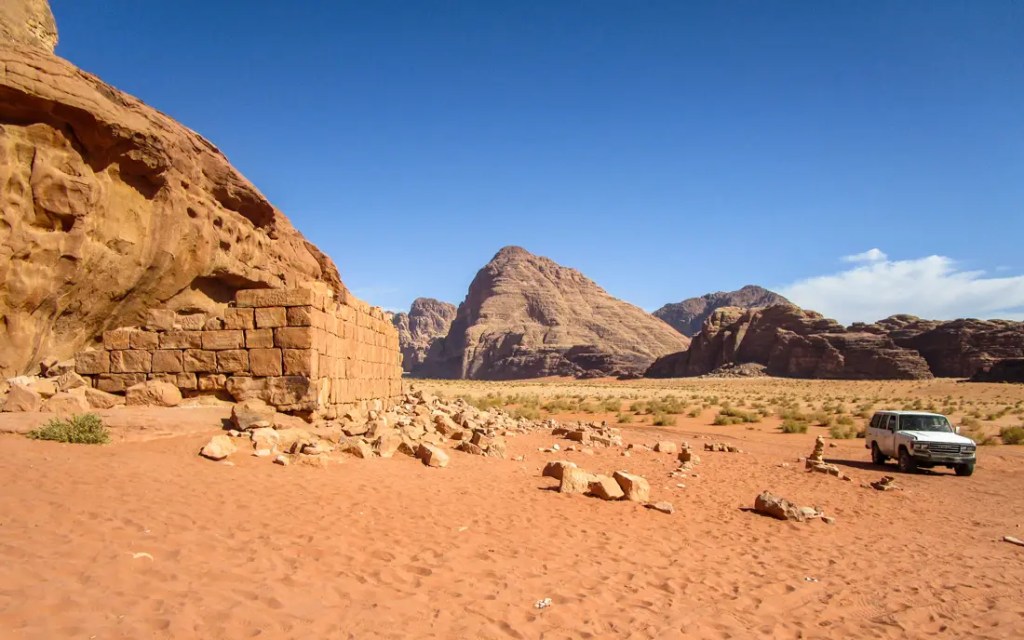
Another popular pitstop for fans of Lawrence of Arabia in Wadi Rum is Lawrence’s House. Lawrence’s House is a ruin of a stone house next to a plateau tucked away between the sand dunes of Wadi Rum. It s widely considered as the residence of Lawrence during his stint in the Wadi Rum desert.
Contrary to popular claim, there is no solid proof of Lawrence actually having resided in the now derelict stone house. The actual house is said to have been built by Nabataeans some 2,000 years ago as a pitstop along ancient caravan routes.
Tourists regularly visit Lawrence’s House to pay homage to Lawrence. At the house, you will be able to see the last remnants of the stone house that was built into the mountain side. Additionally, you will be able to place another small rock tower on the plateau, showing your respect for the British freedom fighter.
Siq Umm Al Tawaqi

The lesser known of the Wadi Rum sites revolving around Lawrence of Arabia are the inscriptions and rock art of Lawrence of Arabis and Faisal of Iraq in the Umm Al Tawaqi Canyon on the northern edge of the Wadi Rum desert. The rock art commemorates both Faisal’s and Lawrence’s role in the Arab Revolt.
While the rock art bares an inscription dating back as far as 1918, the last year of Lawrence’s direct involvement in the Arab revolt, these dates cannot be taken at face value.
While it is surely possible, these artworks are more likely to have been created after the movie adaption of Lawrence’s story in 1962 that brought both Lawrence and Faisal to international fame.
After passing through Wadi Rum Village again on your way out of Wadi Rum, you can take a little detour heading Northeast to see the rock art dedicated to the Brit with your own eyes.
How You Can Explore the Story of Lawrence of Arabia Today

Visiting Wadi Rum today, is easier than it was during Lawrence’s day. Wadi Rum has long since become a tourist destination; tourism constitutes a big part of the income local Bedouins.
You can reach Wadi easily from Amman, the Dead Sea, Petra and Aqaba. You can enjoy the extraordinary desert landscape of Wadi Rum to the fullest by booking a stay in a traditional Bedouin-run desert camp along with a Jeep Tour of the desert.
Jeep Tours, such as the Full Day Tour and the Half Day Tour, regularly include stops at Lawrence’s Spring, Lawrence’s House as well as other notable Wadi Rum sites, such as the Nabatean Temple, Jebel Rum, Al Khazali Canyon along with optional camel rides.
Get familiar with our worry-free, all-inclusive desert experiences highlighting Wadi Rum’s history and Lawrence’s achievements and save your spot today!
FAQs
Was Lawrence of Arabia filmed in Wadi Rum?
Yes, the desert scenes of “Lawrence of Arabia” were filmed in Wadi Rum and the wider Arabian Desert in Southern Jordan along the Saudi border. The filming locations of the movie can still be found in the desert today, drawing millions of visitors every year.
Did Lawrence of Arabia live in Wadi Rum?
During his involvement in the Arab Revolt, T. E. Lawrence of Arabia used the Wadi Rum desert as a safe refuge for at least a few months. Lawrence is said to have lived in what is today referred to as Lawrence’s House during his time in the desert.
Did Lawrence of Arabia go to Petra?
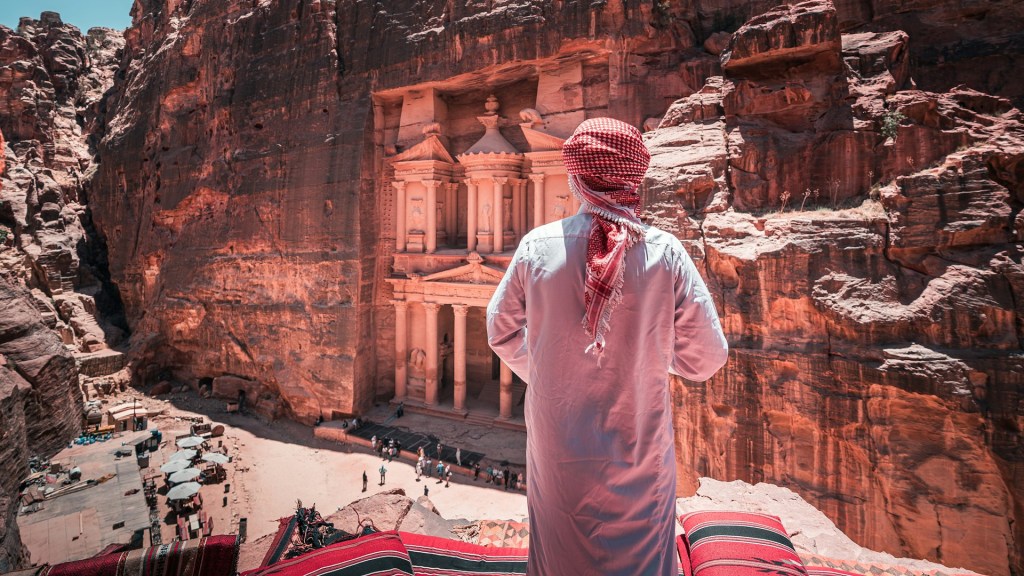
During his time in the Middle East, T. E. Lawrence of Arabia also visited the lost city of Petra along with other historical sites. Lawrence remarks in his book “The Seven Pillars of Wisdom” that he was in awe about the scale and beauty of the rose city.
What has been filmed in Wadi Rum?
“Lawrence of Arabia” is the first major Hollywood movie to have been filmed in Wadi Rum. Since then, many other blockbuster movies have followed. Some of the most notable movies filmed in Wadi Rum are Star Wars: Rogue, Dune, John Wick 4 and The Martian.

 waditribe.com