
Jordan is just a few hours away from Europe’s major airports and by far the most affordable Middle-Eastern destination for European backpackers. Step into a whole new world, a world of Arab and Muslim culture, one of the new seven wonders – and a world of camels.

Yes, you heard right. Jordan is a great place to meet the mighty Arabian camels. While Jordan supports a great population of wild camels, camels have also been domesticated, allowing you to get close to them and even ride them.
| Camels in Jordan – Quick Facts |
| 1. Yes, you can find the Arabian Camel in Jordan. 2. There is an estimated wild population of well over 10,000 camels in Jordan. 3. Camels are integral to Bedouin culture and fulfil a multitude of purposes. 4. Camel milk and meat are staples of the Jordanian cuisine. Camels are also trained for racing in places such as Wadi Rum. 5. As a tourist, you can experience camels on camel rides, camel safaris and camel treks, mostly in Wadi Rum. |
Exclusive Offer
Book a sustainable Camel Ride in Wadi Rum.
Book your camel ride with Wadi Tribe for an animal-friendly and sustainable experience.
Arabian Camels in Jordan – Everything You Need to Know
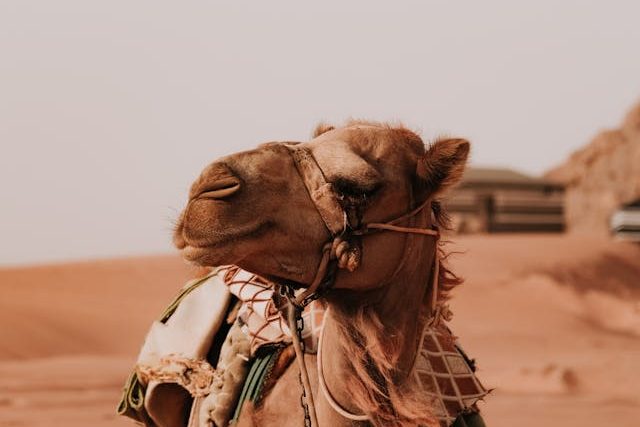
These are the 5 most important things to know about the Arabian Camel, also known as the Dromedary, in Jordan:
- Jordanian Icon: The Arabian Camel, the one-humped Dromedary, is a common sight in Jordan. Major wild Dromedary populations exist in the semi -arid Jordan Valley (Western Jordan) and the Wadi Rum desert (Southern Jordan). The World Population Reviews estimates some 14.000 wild camels to live within the borders of Jordan currently.
- Food and Drink: Camels are well-accustomed to arid climates, surviving on minimal water and stores what they find in their hump. When it comes to food, camels eat whatever they can find, ranging from shrubs to desert grass to other vegetation that pops up in the Wadi Rum desert during periods of seasonal flooding.
- Camels and Humans: Humans regard camels as the “Ships of the Desert”, referring to their ability to cross large swaths of the desert with minimal water. In Jordan, Bedouins are especially akin to the camel, using it for trade, transportation, milk and meal as well as a status symbol. Even camel races remain common practice in Jordan, primarily being held in Wadi Rum.
- Camel Tourism: In recent years, local communities have come to recognise to value of camels as a tourist attraction, increasingly offering camel rides and even multi-day camel treks. Rides and treks are especially popular in the Wadi Rum desert. A camel trek can be a great way to float through the desert, as if you were Lawrence of Arabia.
- Sustainability Practices: With financial prospects comes abuse, too. While riding a camel is possible in an ethically responsible manner, humane treatment is sometimes still lacking. Abuse of camels in tourism is, however persecuted by the Jordanian government. Additionally, the Aqaba Exclusive Economic Zone Authority (the authority responsible of the Wadi Rum Protected Area) and various NGOs work tirelessly to ensure sustainable camel practices in the Wadi Rum desert.
See and Ride Camels in the Wadi Rum Desert
Keen on meeting a camel in Jordan? While you might be lucky and see wild camels along the Jordan Valley and the Dead Sea, the most sure-fire way to meet camels in Jordan are camel experiences in Wadi Rum.
Choose between brief camel tours or lengthy camel treks to get to know these wonderful creatures.
Enjoy a Camel Ride
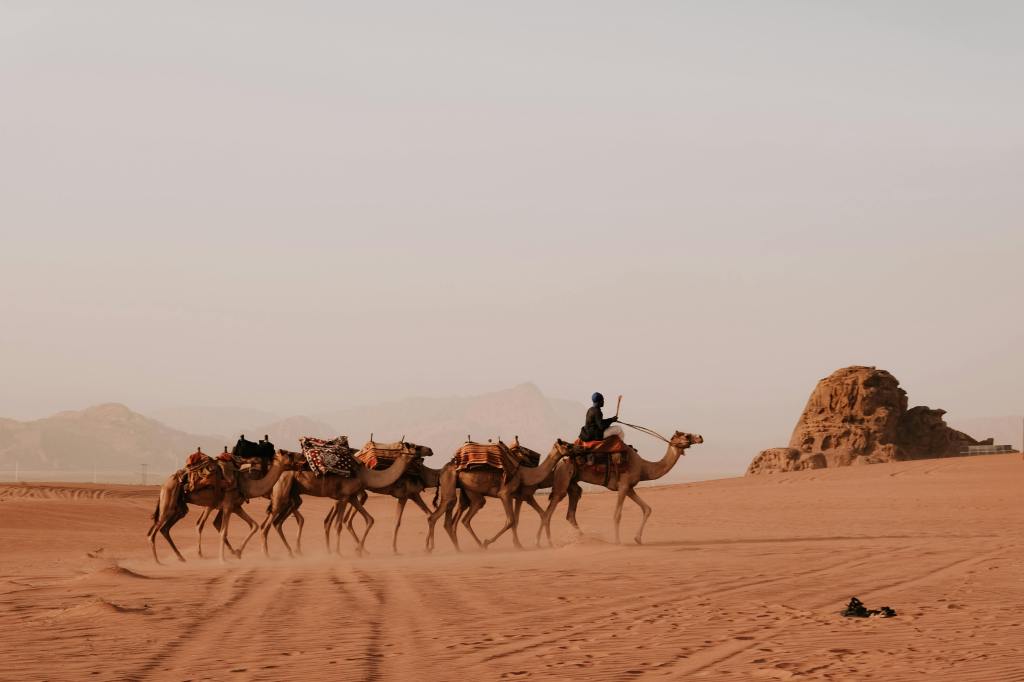
During your visit to Wadi Rum, you will find that many camps in the desert offer one-hour or two-hours camel rides at affordable rates. To save time and money, book your camel ride upfront with your desert camp hosts.
Once in the desert, get to know the majestic camel and explore the beauty of the desert from an entirely new – and sightly bumpy – perspective.
A few notes on camel rides in Wadi Rum:
- Make sure to book camel rides with animal- and eco-friendly providers. Feel free to reach out to hosts and attain more information about their practices.
- Book your camel ride as part of a comprehensive package including your camp stay and your desert tour to save on costs.
- Your camel ride will either be held in the early morning or the late afternoon to avoid the scorching sun as much as possible. Night rides are a hidden gem, providing a magical experience under the stars of Wadi Rum.
Go on a Full-Day Camel Safari

Why only travel on camel-back for an hour or two, when you still have a full day ahead of you? As part of a camel safari, you will have the chance to traverse a larger distance in Wadi Rum and stop at several sites.
As your camel gets a chance to rest, your Bedouin guides will show you around sand dunes, narrow canyon and historical ruins.
A few notes on camel safaris in Wadi Rum:
- Camel safaris are great way to get a deeper understanding of Wadi Rum and life in the desert. However, you will see less sites overall because camels travel slower than jeeps.
- We recommend booking a safaris during fall, winter and spring. Avoid booking during the summer months to avoid the scorching midday heat.
- Just as with the regular camel rides, we recommend booking your safari as part of a travel package that already includes a stay at a Bedouin camp and meals.
Embark on a Multi-Day Camel Trek

If you are looking for a truly unforgettable experience, you can also opt for a multi-day camel trek in the Wadi Rum desert. A lengthy camel trek will allow you to get a better perspective on hundreds of years of caravan trade in the region and explore parts of Wadi Rum that are rarely seen by tourists.
A camel trek within Wadi Rum can last several days leading you along the most popular sites around the desert. With stops at historical sights such as the petroglyphs of Al Kazali Canyon, nature walks such as Abu Kashaba Canyon and the rarely explored Wadi Rum Wilderness Area, these tours hold more than enough adventure for several days
Even lengthier are camel treks from Wadi Rum to Aqaba that can take up to four days and take you from the heart of the desert to the shores of the Red Sea. The longest camel treks lasting up to a full week lead you deep into the Wadi Rum desert, giving you the opportunity to not only enjoy the landscape, but also get to know Bedouin culture and the concept of a nomadic lifestyle on a deeper level.
A few notes camel treks in Wadi Rum:
- When looking for the right provider for your camel trek, try looking for eco friendly and sustainable providers.
- The longer the trek, the more attention you need to pay to how the animals are treated and if they get ample resting times.
- To learn more about how to ethically approach camel safaris in Jordan, we recommend reading our full-length guide on ethical camel rides.
On Another Note: Camel Racing in Jordan
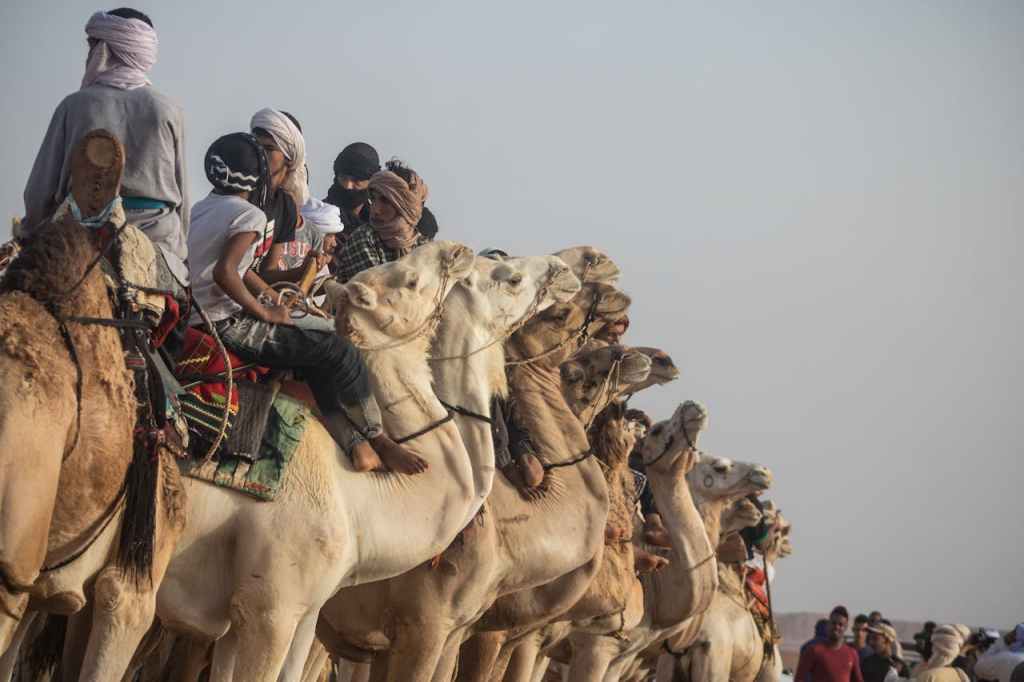
If the preceding paragraphs have given you the impression that camels in Jordan have mostly become a touristic commodity, this one is to balance the scale. While tourists have become a huge source of income for the Jordanian Bedouin, who are mostly camel herders, camels remain a source of nutrition and cultural value.
In Jordan, camel milk is still regularly consumed. The taste of camel milk is said to be very similar to cow’s milk with more of a salty note. However, it is also generally consumed raw, making it potentially heavy on the stomach for people not familiar with it. Camel meat is also consumed in Jordan on special occasions.
Some camels in Jordan are also trained for camel racing events. Camel races regularly happen in Wadi Rum, for example, mostly being an affair of locals.
However, if your wish to see camel races in Jordan, you can adjust your Jordan itinerary to be in Wadi Rum for the Camel Race Festival. The Camel Race Festival in Wadi Rum is usually held in the cooler winter months.
Conclusion

The camel is a common sight in Jordan. With a wild population of more than 10,000 camels along the Jordan Valley (including the Dead Sea) and the Wadi Rum Desert in the South, you are almost guaranteed to meet one along the way.
If you wish ride a camel or experience the original caravan life for some days at a time, you can do so in Wadi Rum. While sailing the ships of the desert under sun, moon and stars, you will gain insights into the nature of Southern Jordan, the history of the Middle East and the unique facets of Bedouin life in the Wadi Rum desert that will last you a lifetime.
FAQ
Does Jordan have camels?
Yes, there is a significant population of wild camels within the borders of Jordan. Camels thrive in semi-arid and arid environments such as the Jordan Valley with the Dead Sea and the Wadi Rum Desert in Southern Jordan.
Do people in Jordan eat camels?
Yes, camel meat is generally eaten in Jordan. However, it is not an every-day food and reserved for special occasions only. Camel meat is said to taste a lot like lean beef with a bit of an earthy taste. If you are lucky, you will get the chance to try it in Jordan.
Can you ride camels in Petra?
Yes, it is possible to get camel rides in Petra. Around the archaeological compound you will find many providers offering donkey and camel rides. We recommend, however, to be carful with spontaneous offers as, in some cases, the animals around the archaeological site can be overworked and mistreated.
What countries are camels in?
The Arabian camel likely originated in Western Asia and was first domesticated in the Middle East or Somalia. Today, the biggest population of camels lives in Australia of all places. Imported to Australia by the 1840s, there is said to be more than one million camels in Australia today. Besides, large camel populations in the Middle East and North Africa where they are kept as livestock and for tourism.

 waditribe.com