
What do Bedouins eat and what makes Bedouin food unique? Bedouins are native to vast strips of land in Northern Africa and the Middle East. Over the years, we had the chance to visit several Bedouin commentates, especially those of Wadi Rum.

This article explores the staple ingredients, traditional cooking techniques, and iconic dishes that define the cuisine of desert nomads we visited. Discover how Bedouins transform simple, natural ingredients into flavourful meals that reflect their resilient way of living.
Key Takeaways
- Bedouin cuisine is built on simplicity, using natural ingredients and resourceful cooking methods that reflect their strong connection to the desert environment.
- Key ingredients like goat’s milk, camel meat, and a variety of fresh herbs play a crucial role, with dishes often prepared through communal cooking techniques like Zarb and open fire cooking.
- Hospitality is central to Bedouin culture, emphasized through communal dining practices and the serving of tea that foster social bonds, with special occasions marked by elaborate feasts.
- If you are looking to experience Bedouin food, Wadi Rum is one of the best places to do so.
While we’re at it…
Try Real Bedouin Food in Wadi Rum.
Book a dessert experience with Wadi Tribe and experience authentic Bedouin cuisine in the Wadi Rum desert.
- Key Takeaways
- Try Real Bedouin Food in Wadi Rum.
- The Essence of Bedouin Cuisine
- Staple Ingredients in Bedouin Dishes
- Traditional Cooking Techniques
- Iconic Bedouin Dishes
- The Role of Bedouin Coffee and Tea
- Special Occasions and Feasts
- Bedouin Hospitality
- Explore Wadi Rum.
- Summary
- Frequently Asked Questions
The Essence of Bedouin Cuisine

Bedouin cuisine is a testament to human ingenuity and resilience. With limited access to water and resources, Bedouins have mastered the art of making the most out of what the desert provides down to its very soil.
The essence of Bedouin food lies in its simplicity and reliance on natural ingredients. Still, Bedouins have developed a culinary culture that is both flavourful and sustainable. With their cooking techniques, they maximise flavour while minimising resource use.
Cooking methods such as using hot embers and communal dining practices not only serve practical purposes but also foster a strong sense of community. These traditions are integral to Bedouin identity, highlighting the importance of preserving this culinary heritage for future generations.
When you visit Bedouins you will see how Bedouin food is not only a means of nutrition, but a key ingredient of the social fabric that holds Bedouin communities together until today. Let’s find out what exactly it means to cook Bedouin-style.
Staple Ingredients in Bedouin Dishes

The foundation of Bedouin cuisine is built on a few key ingredients that are both nutritious and readily available in their environment. Goat’s milk is a staple in many Bedouin dishes, used both for drinking and cooking. Camel meat, another primary source of protein, is often grilled or stewed, providing a hearty and flavourful component to many meals.
While meat is a significant part of the Bedouin diet, there is also a strong emphasis on vegetarian ingredients. Beans and vegetables, grown in areas with favourable conditions, play a crucial role in their meals.
Fresh herbs like mint, coriander, parsley, chives, and dill are frequently used to enhance the flavours of Bedouin dishes. The use of these natural ingredients reflects the Bedouins’ deep respect for their environment and their reliance on what it provides.
Olive oil is another vital element in Bedouin cooking, often used for dressing salads and as a cooking medium. The seasonal availability of ingredients also influences Bedouin dishes, ensuring that the food is always fresh and reflective of the time of year.
With the modern world seeping into Bedouin communities more and more, other foods have started becoming more available and popular. Chicken, for example, is another staple of Bedouin food along with a number of fresh vegetables.
Traditional Cooking Techniques

Bedouins have developed unique cooking techniques perfectly suited to their desert environment. With little firewood available, the nomads have found ingenious ways to make the best of their resources. One of the most fascinating methods is the use of hot embers and underground pits to cook food, ensuring that it remains tender and flavorful, called Zarb.
Zarb: Underground Cooking
Zarb is a traditional Bedouin cooking method that involves creating an underground pit to slow-cook a variety of ingredients. Typically, lamb or chicken, potatoes, vegetables and spices are layered in a tray, which is then buried in the sand and cooked over hot coals. This method not only ensures that the food is tender and flavorful but also connects to the nomadic traditions of the Bedouins.
The process of preparing Zarb is a communal activity, where community members gather to share stories and tea while waiting for the meal to cook. This social aspect of Zarb highlights the importance of community and hospitality in Bedouin culture.
For tourists, Zarb is commonly prepared in the Wadi Rum desert. Bedouin cooks prepare the fire pit every evening before sunset and stock it with plentiful amounts of chicken and vegetables. After some two or three hours, they open the pit again and reveal the finished Zarb to the hungry visitors.
Open Fire Cooking
Open fire cooking is another central aspect of Bedouin culinary traditions, whenever enough firewood is available. Recently, gas cookers have also started making their way into Bedouin communities, making it easier to prepare a variety of dishes.
The method of cooking over open flames not only brings people together but also allows for the preparation of a variety of dishes, from baked bread to roasted meats and vegetables along with various stews and soups.
Meals are typically served in large communal dishes, encouraging shared dining experiences that foster bonds among participants. Guests often sit on cushions or low seating arrangements within a traditional Bedouin tent, creating an intimate and welcoming atmosphere.
Iconic Bedouin Dishes
Mansaf is one of the most iconic dishes in Bedouin cuisine, particularly in Jordanian culture. This dish features lamb cooked in a fermented yogurt sauce and is traditionally served on a bed of rice. Mansaf is often enjoyed during special occasions and communal dining events, showcasing the Bedouin spirit of hospitality and generosity.
In Southern Jordan, Zarb is a common feature of Bedouin desert camps. In Wadi Rum, it is served in many variations as part of dinner buffets for tourists. The mix of meats, preferably chicken, and vegetables is served alongside salads and sides provides plenty of variations for Bedouins and tourists alike.
Another popular dish is Maqluba, which translates to “turned upside.” This dish consists of rice, meat, and vegetables layered in a pot and then flipped onto a plate before serving, creating a visually stunning presentation.
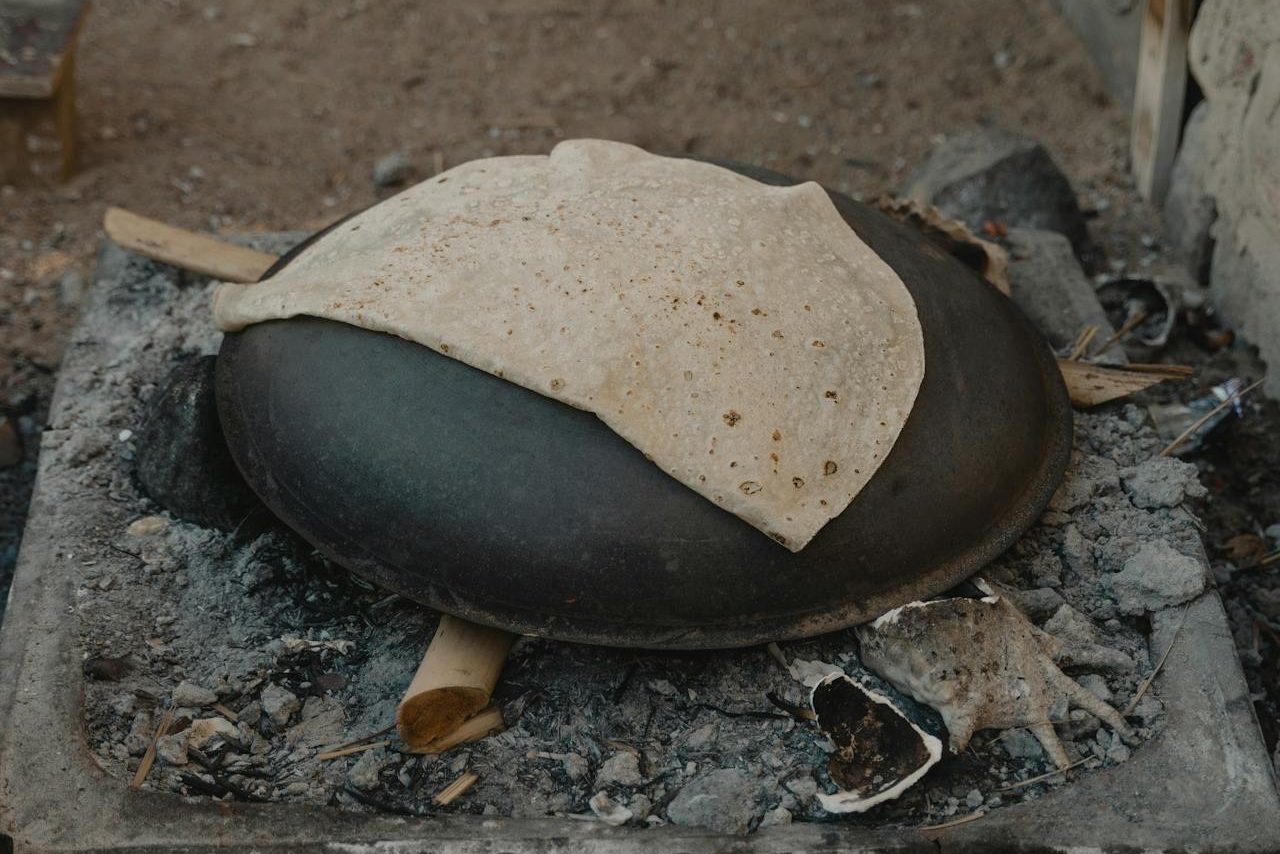
All of the dishes mentioned above are usually eaten with the hands and Bedouin bread. As it is the case with many other Arab-style breads, Bedouin bread is a very thin bread that can be cooked easily. It serves as a vessel for meals and provides important carbs that keep the stomach for a long time.
The Role of Bedouin Coffee and Tea
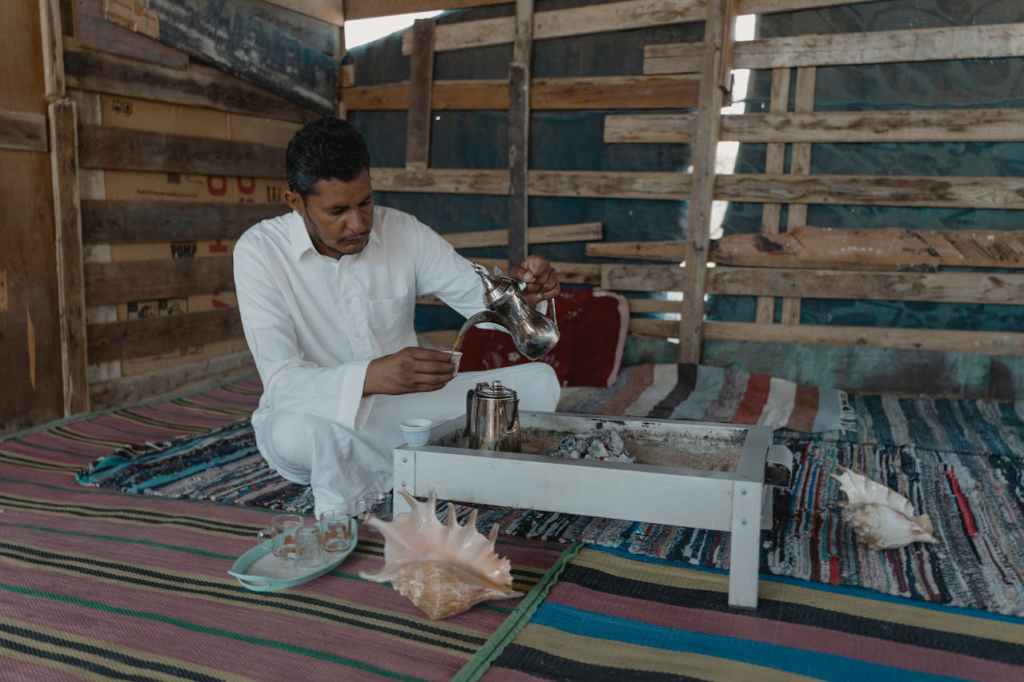
In Bedouin culture, coffee is more than just a beverage; it is a symbol of hospitality, respect, and social bonding. The preparation and serving of Bedouin coffee are surrounded by strict rituals, including the selection of wood for heating and the grinding of cardamom.
Bedouin coffee is known for its strong, bitter flavour, and it is often reserved for special events and honoured guests due to its high value. Drinking coffee acts as a complex communication tool, expressing respect and honour among Bedouins and underscoring their deep-rooted traditions of hospitality.
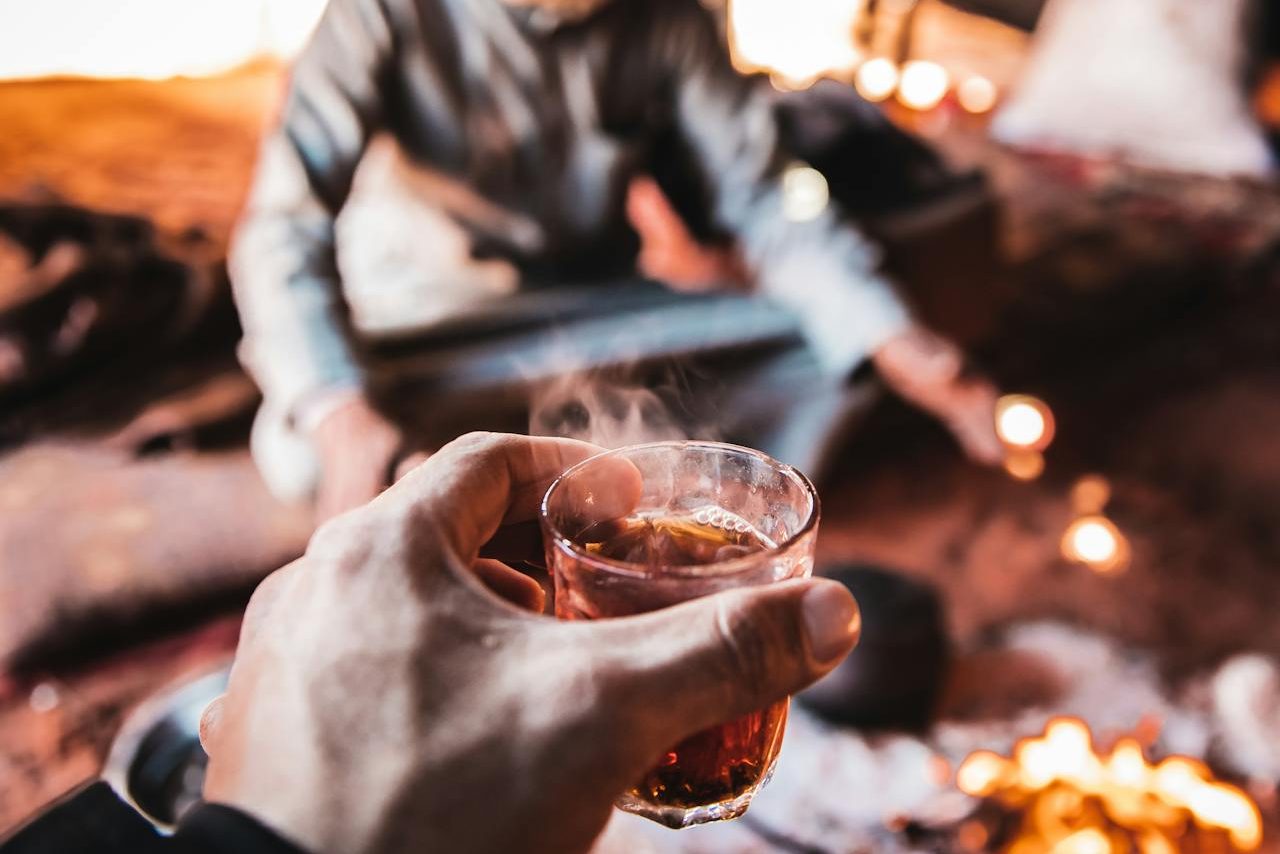
Tea, on the other hand, is more commonly consumed in everyday Bedouin life. Herbal teas made from local desert plants are a staple in Bedouin households, offering a refreshing and soothing drink that complements their meals. Black tea is also very common with it being imported from larger cities.
Special Occasions and Feasts

Special occasions in Bedouin culture are marked by elaborate feasts that bring families and communities together. One of the standout dishes at these events is Madfoona, which consists of a whole stuffed chicken served over rice and roasted vegetables. This dish, along with others, showcases the Bedouin tradition of celebrating with bountiful and flavorful meals.
Feasts often include a variety of salads and sides such as hummus, tahini, and fried eggplant, adding depth and variety to the meal. Another popular dish served during special occasions is Maklube, a flavorful combination of rice and an assortment of roasted vegetables.
The preparation of these dishes often involves communal cooking methods like Zarb, which allows meals to be prepared ahead of time and is convenient for nomadic lifestyles.
These feasts are more than just meals; they are a vital aspect of Bedouin culture, reinforcing social bonds and celebrating the richness of their culinary traditions. The communal dining experience and the sharing of food reflect the values of hospitality and community that are central to Bedouin life.
Bedouin Hospitality
Hospitality is a cornerstone of Bedouin culture, deeply rooted in values of protection and respect for the host. This tradition emphasises the personal and intimate nature of Bedouin hospitality. This tradition also means that Bedouin food is very accessible to curious visitors who are wanting to get a taste of it.
If you are looking to experience Bedouin cooking, we highly recommend you to pay a visit to Wadi Rum, where the local Bedouin community preserves its cooking techniques and shares it with tourists.
Experience Bedouin Food in Wadi Rum

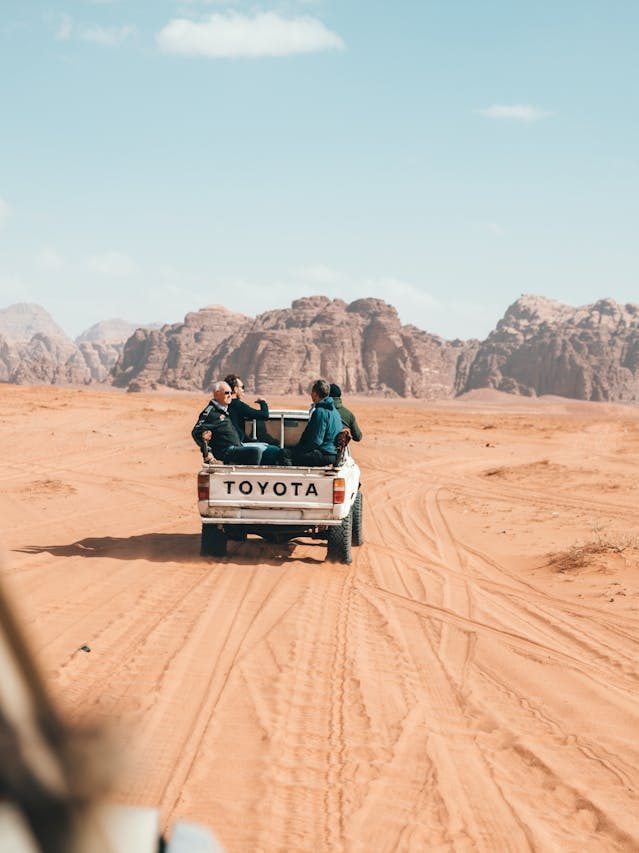
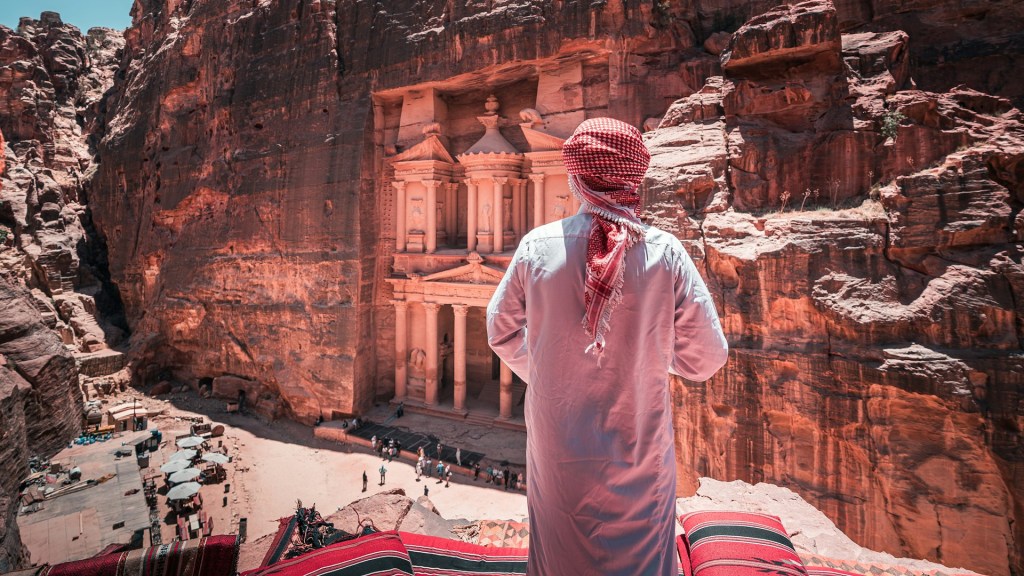
The Wadi Rum desert is located in Southern Jordan along the border with Saudi Arabia. In recent years, this little piece of land has risen to fame for its unique landscapes consisting of red sand and eroded sandstones formations.
Wadi Rum is home to a large Bedouin community who has called this desert home for hundreds of years. These Bedouins have learned to live off what the desert provides them and continue to do so – albeit with restrictions.
Modern life poses several challenges to traditional Bedouin life, such as restrictions to their free movement through the desert. Therefore, in recent years, Bedouins have started to become more sedentary, alternating Bedouin life in towns and the desert.
Tourism has started to be an important source of income for the Bedouins of Southern Jordan, providing vital income to make a living and preserve their cultural heritage. Visit a traditional Bedouin camp in Wadi Rum to get familiar with Bedouin culture and try Bedouin food staples such as Zarb.
Wadi Tribe is an initiative that aims to drive tourism to local Bedouins who foster a more sustainable approach towards desert tourism and Bedouin life. Our partners are members of the Al-Zalabiah family, with each of them hosting a small number of tents nested deep within the Wadi Rum desert. Wadi Tribe is your key to desert experiences and memories that will last a lifetime.
Explore Wadi Rum.
Embark on a desert experience in Wadi Rum, dive into Bedouin culture and try Bedouin food staples such as the Zarb. Book your all-inclusive, worry-free tour with Wadi Tribe.



Summary
In summary, Bedouin cuisine is a rich tapestry of flavors, traditions, and communal practices that have been shaped by the harsh desert environment. From the staple ingredients of goat’s milk and camel meat to the unique cooking techniques like Zarb and open fire cooking, Bedouin dishes offer a taste of desert traditions that are both delicious and culturally significant.
Preserving these culinary traditions is essential for maintaining the cultural identity of the Bedouins and sharing their rich heritage with the world. Visit Wadi Rum to get a taste of Bedouin food and spread the word of this unique cuisine.
Frequently Asked Questions
What is the significance of coffee in Bedouin culture?
Coffee is a cornerstone of Bedouin culture, symbolizing respect and hospitality during special events. It’s more than just a drink; it’s a way to connect and show honor to guests.
What are some staple ingredients in Bedouin dishes?
Bedouin dishes often feature goat’s milk, camel meat, fresh herbs, beans, vegetables, and olive oil as key ingredients. These staples create flavorful and hearty meals that reflect the rich culture of the Bedouin lifestyle.
How is Zarb prepared?
Zarb is made by layering meat, potatoes, and spices in a tray, then burying it in sand and cooking it over hot coals in a pit. It’s a unique cooking method that brings out amazing flavors!
What are some iconic Bedouin dishes?
You can’t go wrong with trying Mansaf, a delicious lamb dish in fermented yogurt sauce, and Maqluba, a flavorful layered rice dish with meat and veggies. Both are quintessential Bedouin favorites!
How do Bedouins practice hospitality?
Bedouins practice hospitality by emphasizing communal dining and creating warm, intimate settings that reflect their values of protection and respect. It’s all about bringing people together and making them feel welcome.

 waditribe.com