
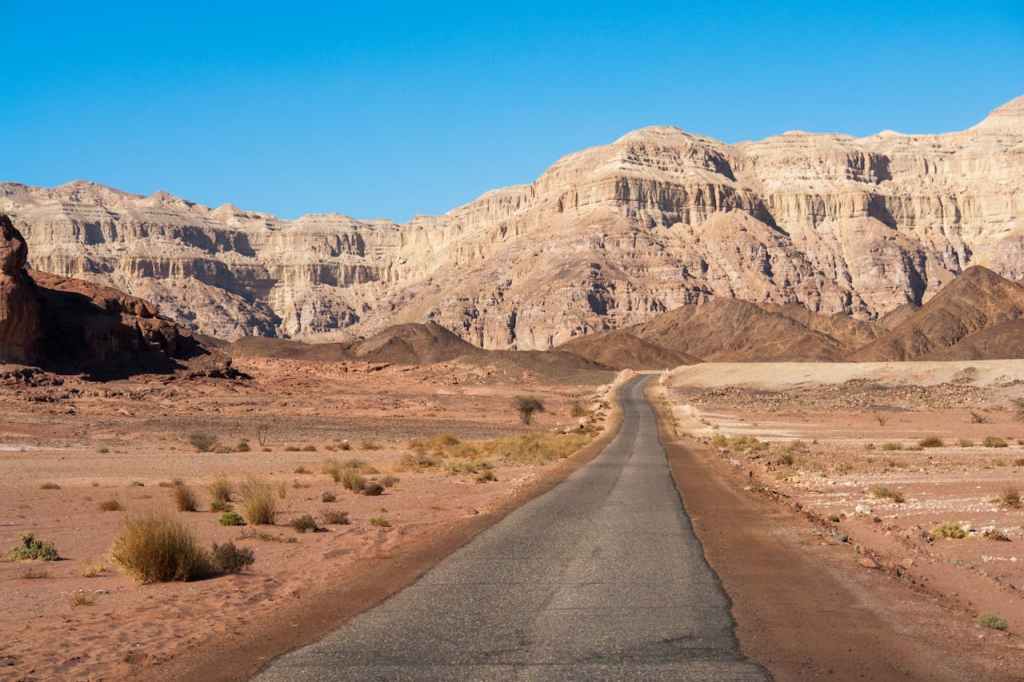
Deep in southern Jordan lies a desert valley so otherworldly that filmmakers use it to represent Mars and the moon. This vast desert landscape, known as Wadi Rum, carries a name as fascinating as its towering sandstone and granite rock formations.
But what does this Arabic word actually mean, and why has this protected area captured imaginations for millennia?
In this article, we’ll learn about the meaning of the word ‘Wadi Rum’, where the name came from and why this stretch of land in Southern Jordan is so remarkable.
Key Takeaways
- The name “Wadi Rum” comes from the Arabic word “wadi,” meaning valley, and “rum,” likely from an ancient Aramaic word meaning “high” or “elevated,” describing its towering rock formations.
- Wadi Rum has been inhabited for over 12,000 years, with petroglyphs and archaeological remains from several prehistoric civilizations, including the Nabataeans.
- Known as the “Valley of the Moon,” Wadi Rum’s red sand dunes and dramatic rock formations create a landscape often used to represent Mars and the moon in films.
- Indigenous Bedouin tribes live in the valley, maintaining traditional lifestyles and offering authentic cultural experiences through tourism.
- Ready to explore this stunning desert valley? Book your Jeep Tour with Wadi Tribe today and experience the magic of Wadi Rum!
Learn About Wadi Rum?
Visit Wadi Rum’s Bedouins.
Stay in a traditional-style Bedouin camp and learn about Wadi Rum’s unique history and culture firsthand. Book your desert experience with Wadi Tribe for a worry-free experience.
- Key Takeaways
- Visit Wadi Rum’s Bedouins.
- What Does Wadi Rum Mean? The Etymology of Wadi Rum
- Wadi Rum’s Connection to the Lost City of Iram
- Why is Wadi Rum called the ‘Valley of the Moon’?
- The Historical Significance Behind the Name ‘Wadi Rum’
- Modern Recognition and UNESCO Status of Wadi Rum
- Cultural Meaning for Bedouin Tribes
- Geographic and Geological Meaning of Wadi Rum
- Experience Wadi Rum Today
- The Bottom Line
- FAQs
What Does Wadi Rum Mean? The Etymology of Wadi Rum

The name ‘Wadi Rum’ derives from two distinct arabic word components:
“Wadi” translates to valley or river valley – specifically referring to a dry riverbed that fills with water only during rare desert rains. This describes the geography of Wadi rum, where ancient water channels carved the dramatic narrow canyons and valleys we see today and rainfall only occurs seasonally.
The second part, “Rum,” presents more scholarly debate. The most widely accepted theory connects “rum” to an ancient Aramaic word meaning “high” or “elevated.” This interpretation aligns with the valley’s towering rock walls and sandstone mountains that rise over 1,54 meters above the desert floor at their highest peak.
Alternative theories suggest “Rum” derives from the Arabic word “ruml,” meaning sand. Given the extensive red sand dunes that flow between the granite rock formations, this interpretation also fits the landscape. Some ideas propose the complete phrase means “valley of high places,” directly referencing the vertical cliffs that define WadiRum’s character.
In Arabic language texts, you might encounter the name transcribed as “Wadi Ramm”. This is due to regional pronunciation differences and varying transliteration habits between the Arabic and Roman scripts.
Wadi Rum’s Connection to the Lost City of Iram

One of the more intriguing theories surrounding the Wadi Rum meaning connects this desert valley to Iram, a lost city mentioned in the Quran. Islamic texts describe Iram as a magnificent city distinguished by its “lofty pillars” – a description that remarkably matches Wadi Rum’s famous Seven Pillars of Wisdom rock formation.
‘Have you not considered how your Lord dealt with ‘Aad – [With] Iram – who had lofty pillars, The likes of whom had never been created in the lands’ [Surah Al-Fajr, 6-14].
While the presence of extensive rock carvings and inscriptions from several prehistoric civilisations throughout the Wadi Rum protected area supports theories that this region served as a significant center for early human settlements.
Archaeological remains scattered across the valley show evidence of sophisticated societies, including the Nabataeans who established crucial trade routes through these narrow canyon passages. The persistent oral traditions among local Bedouin tribes present in the region since the 14th century also reference ancient cities and forgotten peoples, lending credence to connections between Wadi rum and legendary places like Iram.
However, it is important to mention that none of the archaeological remains or oral traditions from Wadi Rum actually provide any tangible evidence for a connection between the Quranic City of Iram and Wadi Rum. Above all, Wadi Rum has never had an urban character. Only recently, Wadi Rum Village has developed into a settlement that could be described as a city.
Why is Wadi Rum called the ‘Valley of the Moon’?

Beyond its Arabic origins, Wadi Rum earned the nickname “Valley of the Moon” due to its striking resemblance to lunar terrain. The red sand covering the valley floors, combined with the weathered sandstone mountains and natural arches, creates an otherworldly landscape that seems more suited to other planets than Earth earning it comparison not only to the moon but also Mars.
This moonscape quality results from millions of years of geological processes. Wind erosion, occasional flash flooding, and tectonic movements carved the distinctive rock formations that give Wadi Rum its alien appearance.
The dominant red and pink hues come from iron oxide deposits in the sandstone, creating the dramatic color contrasts that make this valley a favorite for filmmakers depicting space exploration.
The “Valley of the Moon” description perfectly captures how visitors feel when they first experience Wadi Rum – transported to another world entirely. Whether exploring narrow canyon passages or watching sunrise illuminate the granite rock faces, the landscape consistently defies earthly expectations.
Similarly, Wadi Rum has also come to be referred to as ‘Mars on Earth’. This nickname is once again a reference to its unique mix of sandstone formations and red sand dunes. It is further helped by popular Hollywood movies about the red planet being shot in Wadi Rum, such as ‘The Martian’ and ‘Red Planet’.
The Historical Significance Behind the Name ‘Wadi Rum’

Human occupation of Wadi Rum stretches back to prehistoric times, with evidence suggesting continuous habitation for at least 12,000 years. The valley served as home to several prehistoric civilizations, each leaving their mark through petroglyphs and rock carvings that cover cliff faces throughout the protected area.
The most prominent tribal group to establish lasting presence were the Nabataeans, who dominated trade routes between the 4th century BCE and 1st century CE. These skilled merchants built temples, water collection systems, and rest stations that transformed Wadi Rum into a crucial waypoint for caravans traveling the Arabian peninsula.
During the Roman Empire and Byzantine Empire periods, various Arab tribes continued using Wadi Rum as a refuge and gathering place. The valley’s strategic location near the Red Sea trade routes made it valuable for controlling commerce between Arabia and the Mediterranean world, even during times of Roman persecution of local populations.
Archaeological surveys have documented over 25,000 petroglyphs and 20,000 inscriptions throughout the valley, making Wadi Rum one of the world’s largest open-air archaeological libraries.
Lawrence of Arabia Connection
Lawrence of Arabia’s time in Wadi Rum during the Arab Revolt added romantic and adventurous associations to the valley’s name. His detailed descriptions of the landscape, combined with later film adaptations of his story, helped establish Wadi Rum’s reputation as a place of historical intrigue and natural wonder.
Key landmarks like Lawrence’s Spring (Ain Shallaal) and Lawrence’s House continue attracting visitors interested in this colonial-era history. The enduring fascination with Lawrence’s exploits has contributed significantly to Wadi Rum’s tourism development, though local Bedouin guides ensure that visitors also learn about the valley’s much deeper cultural significance.
Interested in Lawrence of Arabia? We wrote a whole article on the story of T.E. Lawrence in Wadi Rum. Dive into the story now.
Modern Recognition and UNESCO Status of Wadi Rum

Wadi Rum achieved international recognition as a UNESCO World Heritage site in 2011, acknowledging both its natural wonders and immense cultural heritage. The protected area encompasses 74,200 hectares – roughly equivalent to the size of New York City – making it the largest wadi in Jordan and one of the most significant desert conservation areas in the middle east.
The valley’s modern fame largely stems from its association with T.E. Lawrence during the Arab Revolt (1916-1918). Lawrence used Wadi Rum as his operational base while organising resistance against ottoman control, later documenting his experiences in the memoir “Seven Pillars of Wisdom.”
Recent Hollywood productions have further cemented Wadi Rum’s status as an otherworldly place worth visiting. Some of the more recent blockbusters filmed in Wadi Rum, are ‘The Martian’, ‘Dune: Part 1’, ‘Dune: Part 2’ and ‘John Wick 4’.
Today, Wadi Rum village serves as the only permanent settlement within the protected area. Established in the 1970s, Rum Village provides a base for tourism operations while preserving traditional bedouin lifestyle elements.
Cultural Meaning for Bedouin Tribes

For the indigenous Bedouin tribes of Wadi Rum, particularly the Zalabiah and Zweideh groups, the valley’s name carries profound cultural significance beyond its literal translation. This landscape represents their ancestral homeland – a place where their families developed the knowledge needed for survival in one of the world’s harshest environments.
Traditional Bedouin lifestyle involved a nomadic existence, with most local Bedouin moving seasonally between grazing areas and water sources. The distinctive rock formations served as natural navigation landmarks, helping travelers find their way across the vast desert. Family groups would maintain goat herds and practice profitable agriculture in rare oasis areas, while the men often engaged in long-distance trade.
Multiple tribal groups historically claimed territories within the broader Wadi Rum region, each with specific rights to particular valleys, springs, and grazing areas. Although modern economic pressures have reduced the nomadic existence today, many Bedouin families still maintain traditional practices.
The transformation from goat hair tents to concrete houses in Rum Village represents broader changes affecting Bedouin culture. However, the locally run society maintaining traditional Bedouin camp experiences ensures that visitors can still witness authentic desert traditions and understand how indigenous peoples interpreted this remarkable landscape.
Geographic and Geological Meaning of Wadi Rum

Wadi rum’s location in the far South of Jordan, approximately 60 kilometers Northeast of Aqaba, places it at the Northern edge of the vast Hisma desert system. The valley sits between two major peaks: Jebel Umm Ashreen and Jebel Rum, both rising sharply from the surrounding desert floor.
Ancient tectonic movements created the fundamental structure, while millions of years of erosion carved the narrow canyons and exposed the layered rock walls that define the valley cut through pre-cambrian granite and sandstone formations.
Two distinct types of sandstone create Wadi Rum’s varied landscape. Iron oxide-cemented quartz sandstone forms the steep, reddish cliffs that dominate many views. Softer, white quartz sandstone creates the gentler, rounded formations found in certain areas. This geological diversity explains why the ancient arabic word “rum” could reference both the “high places” of dramatic cliff faces and the “sandy” expanses of eroded valleys.
The presence of natural arches, deep gorges, massive landslides, and extensive cave systems throughout the valley demonstrates the ongoing geological processes that continue shaping this landscape.
Flash flooding during rare rainstorms during winter still carves new channels and modifies existing formations, ensuring that Wadi Rum remains a dynamic, evolving system rather than a static monument.
Experience Wadi Rum Today

Modern visitors seeking to experience Wadi Rum should consider staying overnight in a traditional Bedouin camp. These camps provide authentic experiences that connect travelers with both the natural environment and Bedouin culture.
Guided tours offer multiple ways to explore the valley, from jeep and camel tours to rock climbing expeditions that take advantage of the excellent granite rock climbing opportunities.
Vehicle tours provide access to remote formations like the Burdah rock bridge, while camel rides offer slower, more contemplative experiences that echo traditional desert travel.
The tourism business in Wadi Rum focuses increasingly on sustainable practices that respect both the natural environment and Bedouin heritage. Visitors can participate in traditional activities, learn about desert survival techniques, and experience the remarkable night sky that made this valley legendary among ancient travelers.
Wadi Tribe does its part in creating opportunities for local Bedouin guides. At Wadi Tribe, we collaborate with members of the Al-Zalabiah family to create authentic and immersive desert experiences that allow visitors to learn about Wadi Rum’s nature, history and culture alike.
The Bottom Line

Wadi Rum, known as the Valley of the Moon, is a vast desert valley in southern Jordan famed for its towering sandstone and granite rock formations. Its name, derived from Arabic and Aramaic roots, reflects its dramatic geology and cultural heritage.
Home to several prehistoric civilizations and Bedouin tribes, Wadi Rum holds rich archaeological and historical significance, including ties to the lost city of Iram and the Arab Revolt led by T.E. Lawrence.
Today, it is a UNESCO World Heritage site offering unique experiences like jeep and camel tours, rock climbing, and authentic Bedouin camp stays, blending natural wonder with deep cultural legacy.
FAQs
How did Wadi Rum get its name?
Wadi Rum’s name comes from Arabic and possibly Aramaic roots. “Wadi” means valley or river valley, specifically a dry riverbed that fills with water during rare rains. “Rum” likely derives from an ancient Aramaic word meaning “high” or “elevated,” referring to the towering sandstone and granite rock formations.
What is the significance of Wadi Rum in the Bible?
Wadi Rum is believed to be the land of the Midianites, where Moses fled after killing an Egyptian. The area holds historical and religious significance tied to ancient peoples mentioned in biblical texts.
What does Wadi in Arabic mean?
In Arabic, “wadi” means valley or river valley, often referring to a dry riverbed that temporarily fills with water during rains.
What is the story of Wadi Rum?
Wadi Rum is a vast desert valley in southern Jordan known for its dramatic sandstone and granite rock formations. It has been inhabited since prehistoric times by various civilizations, including the Nabataeans. Today, it is a UNESCO World Heritage site and a popular destination for jeep and camel tours, rock climbing, and experiencing traditional Bedouin culture.

 waditribe.com