
It is quite striking that the Bedouin people seem to wear a lot of black clothing in the desert. After all, everything we know about the colour black and its heat-absorbing properties tells us that it should be the worst possible colour to wear in the desert. Or is everything we learned about wearing black under the sun a lie?
In this article we will attempt to answer a question that has had Western countries from curious tourists to well-equipped scientists puzzled for decades: Why wear black in the desert?
Key Takeaways
- Bedouin people in deserts often wear black clothing and use black tents, which seems surprising because black absorbs more heat.
- Scientific studies found that black robes absorb heat but lose it before it reaches the skin, making black clothing as cool as white in the desert.
- Loose black robes allow air to flow inside, creating a cooling effect through convection and wind.
- Bedouins use black wool from their black goats for clothing and tents, and black clothing is practical and available, not just a cultural choice.
- Key Takeaways
- An Introduction to the Bedouin and Their Black Clothing
- Why Wear Black in the Desert? 5 Convincing Arguments
- The Bottom Line
- Frequently Asked Questions
An Introduction to the Bedouin and Their Black Clothing

Before we get into the nitty-gritty research of the impact of black clothing on body temperature, let’s first get a better idea of who the heck would wear black clothing in the desert in the first place.
When we talk about wearing dark clothing in the hot desert, we think about the Bedouin people. The Bedouin, their name literally meaning desert dwellers, are nomadic and semi-nomadic peoples that inhabit the desert regions of North Africa and the Middle East. Some countries with the highest Bedouin populations are Sudan, Algeria, Saudi Arabia, Iraq and Jordan.
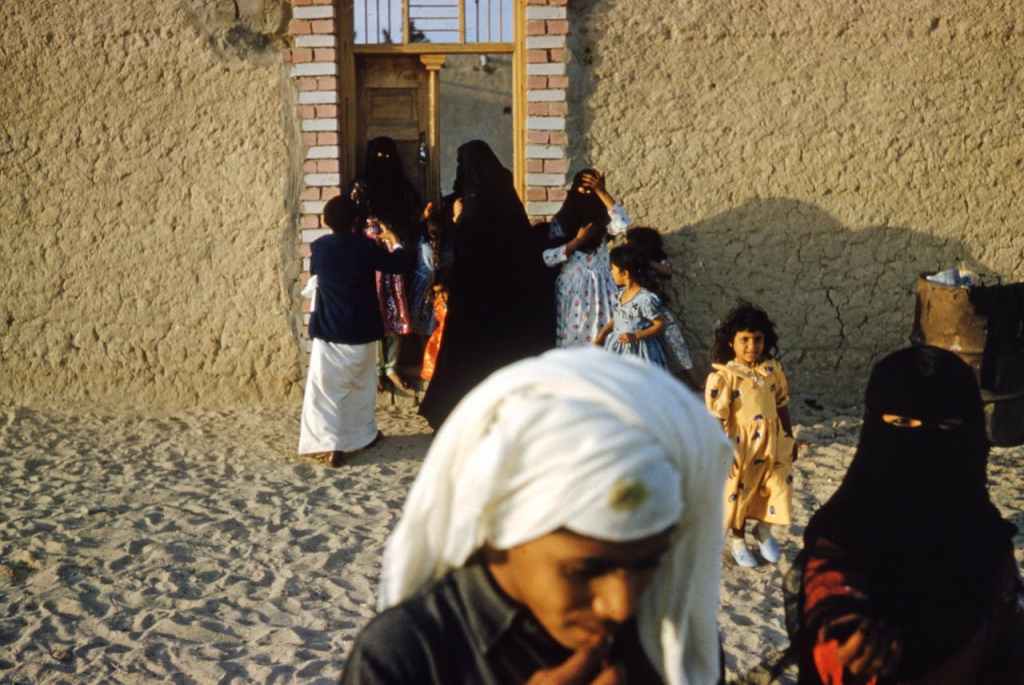
Besides their non-sedentary nature, the Bedouin people have made a name for themselves for the distinct looks. In the public imagination, Bedouins often appear dressed in long, flowing black robes covering most of their bodies. Men and women alike seem to cover their skin in protection against the sun (understandably), regularly choosing dark clothing to do so (but why?).
The element of the colour of black is not only limited to Bedouin clothing. Bedouin tents, especially those found in the Middle East, are also primarily made of black fabric (again, why?). As other commenters have pointed out before, one would assume that the Bedouin people, having lived in the desert for centuries at the very least, would have found a less heat-absorbing material by now, right?
Would you like to learn more about Bedouin clothing? Read our in-depth article about the Bedouin people and their clothing tradition.
Why Wear Black in the Desert? 5 Convincing Arguments
Sometimes, what we see is not all that we make it out to be. It may be that the colour black works very well to absorb heat. And it may be that the Bedouin people wear and use a lot of black fabric. But does this mean that the Bedouin have been silently roasting in their black robes for centuries? Of course not.
So, let’s open our minds to reimagine the relationship of the colour black and the sun and what it means to the nomadic peoples of North Africa and the Middle East.
Black Robes Do Not Get Hotter Than White Robes

The question “Why wear black in the deser?” is not a new one by any means. In fact, scientists have worked to provide an answer to this riddle as early as the 1980s. As the Guardian describes, scientists of Harvard University put the black robes of the Bedouin to the test against a white robe and the results were shocking.
After the experiment, the scientists noted that “the amount of heat gained by a Bedouin exposed to the hot desert is the same whether he wears a black or a white robe.” So, is everything we learned about the heat-absorbing qualities of the colour black wrong? Well, no.
Darker shades absorb more heat than lighter shades. But that’s not the whole story. As the scientists wrote, “the additional heat absorbed by the black robe was lost before it reached the skin.” In other words, something happens in between the absorption of heat from the sun and the arrival of this heat to the skin that we haven’t accounted for.
Loose Black Clothes Do the Trick
One things we haven’t considered, when assuming that a black robe absorbing heat would make you feel hot, is that this phenomenon works bidirectionally. Yes, a black robe absorbs the heat of the sun. But yes, a black robe also absorbs body heat. And this is where the magic happens. Let’s remember what the Bedouin people wear. They wear loose black clothing.
Crucially, the looseness of their clothing allows for a phenomenon called convention, as in air circulation, to occur between their skin and their garments. As the black robes absorb body heat on the inside, this heat rises to the outside is a sort-of chimney effect, in turn brings cooler air into the dark cloth. Additionally, this may be helped by desert winds breezing through the robes, so the scientists conclude.
Another observation of mine seems to confirm this conclusion. In contemporary Bedouin communities, women are seen wearing black more than men, while also using more flowing black clothing (abayas). Does this indicate that the effects of convection actually help make black clothing more suitable under heavy solar heat loads?
Black Goats Give Black Wool

In the discussion of wearing black in the desert, we couldn’t help but notice, that the commenters are not only puzzled by the use of black in the desert, which is understandable, but also seem to assume that the use of black clothing was a sort-of deliberate decision over other colours, one lead by cultural or religious beliefs.
Reality seems to paint another picture, however. After all, Bedouin communities are built on scarceness. Life in arid and harsh desert conditions demanded of them to make use of whatever resources they obtained. One of their resources happened to be the goats they herded, black goats to be specific.
Naturally, the Bedouin herding black goats would use their hair to produce fabrics. These fabrics they would use to manufacture their iconic black clothing and black tents. Now, one could say: But surely, not all Bedouin goats were black. And they would be right? But then again, black wool doesn’t itself to colouring, white wool does.
Bearing this in mind, it doesn’t seem like a stretch to assume that white wool was coloured and used for ornate indoor decorations such as carpets and cushions, while black wool was used as is for everyday items that would see more wear and tear, such as clothing and tents.
It is Not Always Hot in the Desert
Moreover, in the discussion of Bedouin clothing choices, it often seems to be forgotten, that the Bedouin do not actually live under the scorching desert heats year round. As it is the case in most places on earth, desert climates change. While desert summers can be hot and sun-intense, winter also brings colder temperatures to the native lands of the Bedouin.
So, while it does make sense to raise an eyebrow over the usage of black clothing during the summer months, it would be all the more applaudable to use black fabrics in winter, wouldn’t it?
After all, you can escape to a shaded canyon or a tree to avoid direct sunlight, but you cannot escape the cold of a winter night…unless you had a tent that was really good at absorbing the little heat gained on a winter day. You see where we’re going with this, right?
Not All Bedouin Wear Black in the Desert

Ultimately, the black Bedouin robe might be the most popular desert dress in Western imagination, but it is by far not the only one. When discussing whether to wear black in the desert or not, one has to remember that the Bedouin also regularly wear robes in lighter colours such as white, grey and brown. Other more ornate parts of Bedouin clothing reveals even more colours, such as red, a colour that used regularly in keffiyehs and women’s robes (abayas).
At the end of it, black clothing may be a peculiar choice of clothing under visible light, but it is by far not the only one. The Bedouin people not only wear black robes, but a range of colours. So, it may not be that black is somehow better to wear in the desert heat than other colours, but simply just as good and at times more available.
The Bottom Line

So, what does this leave us with? Why wear black in the desert? Well, for one, you don’t have to wear black robes in the desert. But, crucially you also don’t have to not wear it.
As research suggests, black clothing in the desert is just as good as clothing of any other colour. This may be due to the facts that black absorbs direct sunlight, but also body heat, creating convection currents that prevent the heat of the sun to actually reach the body and supply it with cooler air instead. This effect is helped by the fact that the Bedouin wear loose robes allowing for more air flow.
Besides that, one should not forget that life in the desert is not dictated by the latest fashion choices, but rather by a scarce host of resources. In this environment, the Bedouins had to make something of the black wool their goats providing, and loose black robes and black tents might have been just the right solution. Not because they were magically better than white clothing, but simply because they were just as good.
Frequently Asked Questions
Why do they wear dark colors in the desert?
Against popular belief, dark clothing does not seem to store more heat than white clothing. This was shown by a 1980’s study by Harvard University. Additionally, the choice of black color clothing seems to be related to the black wool of the Bedouins’ goats.
Is it better to wear black or white in the desert?
While black absorbs more visibe light and therefore heat, research suggests that it doesn’t make a difference, whether you wear black or white in the desert. Instead, you should focus on covering your skin to protect it from direct sunlight and to use sun screen for ideal uv protection.
Why do people in hot places wear black?
While it is true that Bedouin people regularly wear black clothing, it is not the only color they wear. In fact, it is also very common among Bedouin to wear lighter colors such as brown, grey and white. Current research also suggests that dark color clothing does not convert into a higher body temperature under the desert sun.
Who wears black in the desert?
The Bedouin people, nomadic and semi-nomadic desert dwellers of North Africa and the Middle East are known to wear black clothing and live in black tents in the desert. The choice of black fabric is closely related to them herding goats that predominantly have black wool.


 waditribe.com