
The Grand Egyptian Museum (GEM) has finally opened. The Egyptian prestige project that was more than 30 years in the making and postponed several times, finally held its official opening ceremony on November 1, 2025, sparking global excitement. But is it worth the hype?
We visited the Grand Egyptian Museum in October 2024 during its limited soft launch and were surprised to say the least. In this article, we will not only introduce you to Egypt’s new flagship museum, but also share with you, if it’s worth a visit.
Key Takeaways
- The Grand Egyptian Museum (GEM) is the world’s largest archaeological museum, showcasing over 100,000 artifacts from Ancient Egypt, including the complete contents of Tutankhamun’s tomb for the first time ever.
- The museum features modern, spacious galleries with state-of-the-art displays, a grand hall, grand staircase, and panoramic views of the Giza Pyramids, offering a complete and immersive experience.
- GEM addresses the limitations of the old Egyptian Museum by providing better preservation, security, and presentation of Egypt’s cultural heritage, boosting national pride and tourism.
- Visitors can enjoy additional attractions like the Children’s Museum, temporary exhibitions, official souvenir stores, and quality restaurants, making it a well-rounded destination worth visiting.
- Key Takeaways
- The Grand Egyptian Museum (GEM): An Odyssey
- The Grand Egyptian Museum Explained: From the Grand Hall to King Tut’s Gold Mask
- More Exciting Features of the Grand Egyptian Museum
- We Visited the Grand Egyptian Museum Before the Official Opening: This is What We Think
- The Bottom Line
- Frequently Asked Questions
The Grand Egyptian Museum (GEM): An Odyssey
The Grand Egyptian Museum (GEM) was first announced in 1992, marking the beginning of a 33-year construction odyssey. But before we get into the construction itself, why does Egypt need a brand-new museum anyways.
Until November 2025, the center of Egyptian museum culture was the (Old) Egyptian Museum on Tahrir Square in the heart of Cairo. This museum held more than 120,000 items, among it several mummies and Tutankhamun’s spectacular gold mask found by British egyptologist Howard Carter. However, it suffered from several problems: it was overcrowded, overfilled and outdated. To us, the old museum often felt more like a bustling archive rather than a modern museum (which I loved btw).
The growing concerns around the old museum were especially hurtful to Egypt’s attempts at reclaiming some of its lost artefacts such as the Rosetta Stone, the bust of Queen Nefertiti. Whenever asked, countries displaying illegally acquired Egyptian artefacts could claim that Egypt could not guarantee safe conditions for these invaluable treasures in their aging museum. The solution? A brand-new museum.
After first being announced in 1992, construction of the Grand Egyptian Museum first started in 2005. Unsurprisingly, the Arab Spring, the rise and fall of president Mohamed Mursi and the military coup leading to the rise of current president Abdel Fatah el-Sisi along with financial crises made for shaky construction condition.
Still though, by the early 2020s, the Grand Egyptian Museum finally looked ready to open, only for its official opening to be rescheduled a measly eight (!) times. In all fairness, the Covid-19 pandemic and the ongoing Gazan genocide provided just cause for rescheduling. After opening its doors to visitors for the first time in 2024 as part of a trial programme, the Grand Egyptian Museum finally saw its full opening on November 1, 2025.
The Grand Egyptian Museum Explained: From the Grand Hall to King Tut’s Gold Mask
The Grand Egyptian Museum (GEM) is the new flagship museum of the country and the world’s largest archaeological museum, strengthening its claim to the world, that Egypt is indeed ready to present its historical artefacts on its own.
On a total area of 500,000 m2 (5,400,000 sq ft) including the main building, several side buildings and extensive parks and gardens, the Grand Egyptian Museum present a whooping 100,000 items in state-of-the-art displays.
These are some of the features of the Grand Egyptian Museum you will find inside:
The Grand Hall
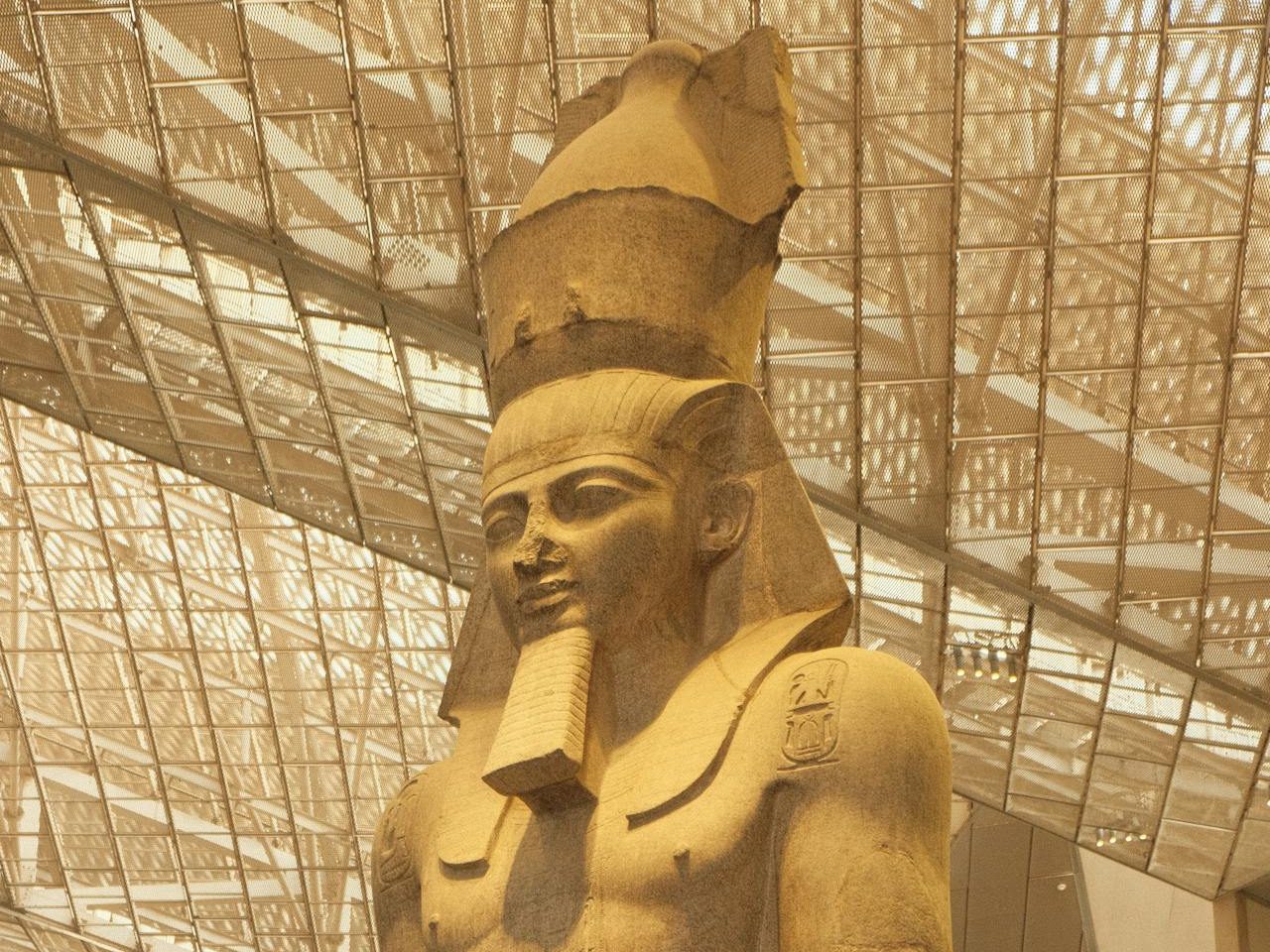
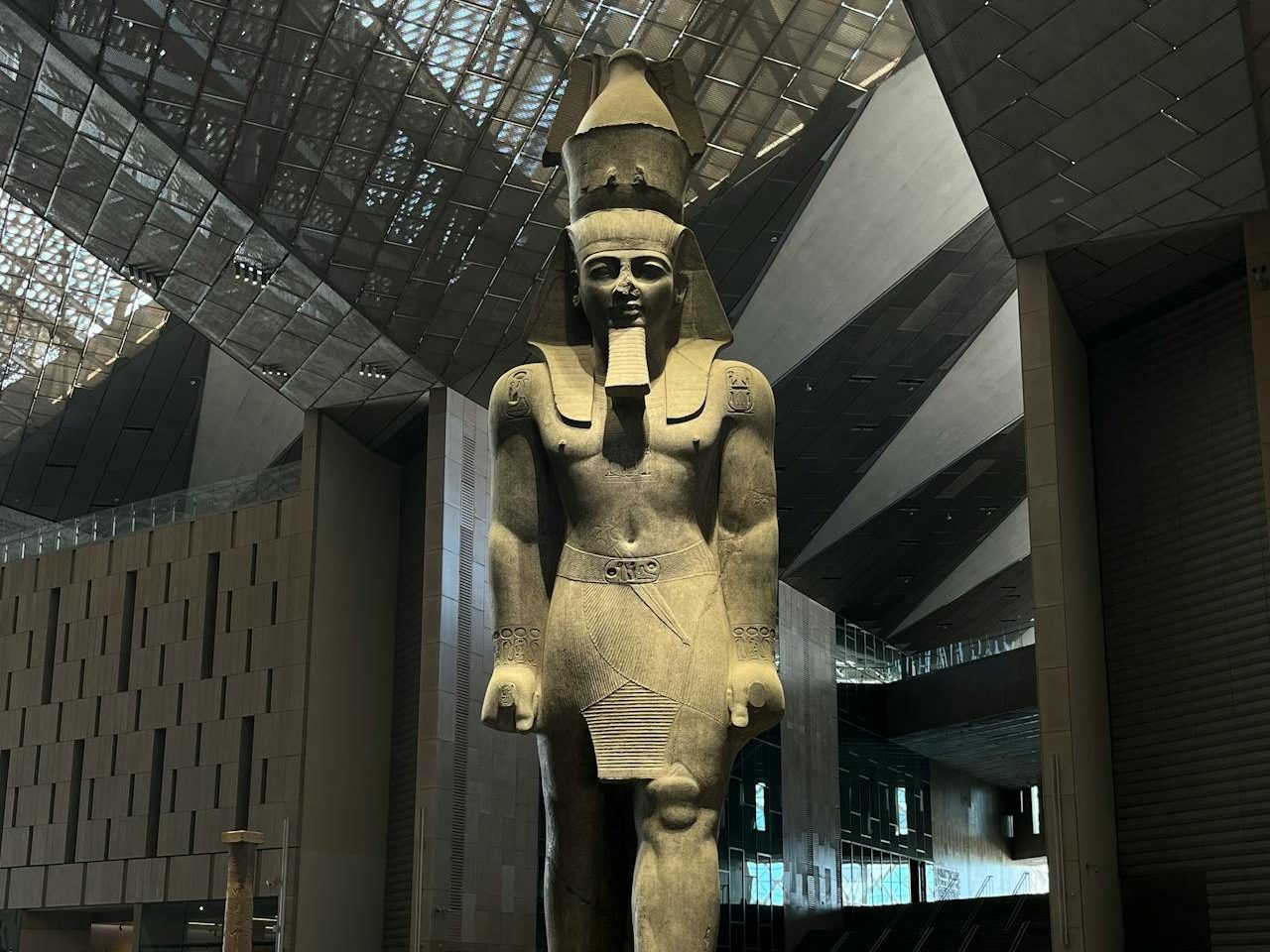
Upon entering the Grand Egyptian Museum through a pyramid-shaped entrance, you step into the Grand Hall. The Grand Hall, the museum’s atrium, not only serves as a reception and information center, but also present the first of its many astounding archaeological finds: a statue of Pharaoh Ramesses II.
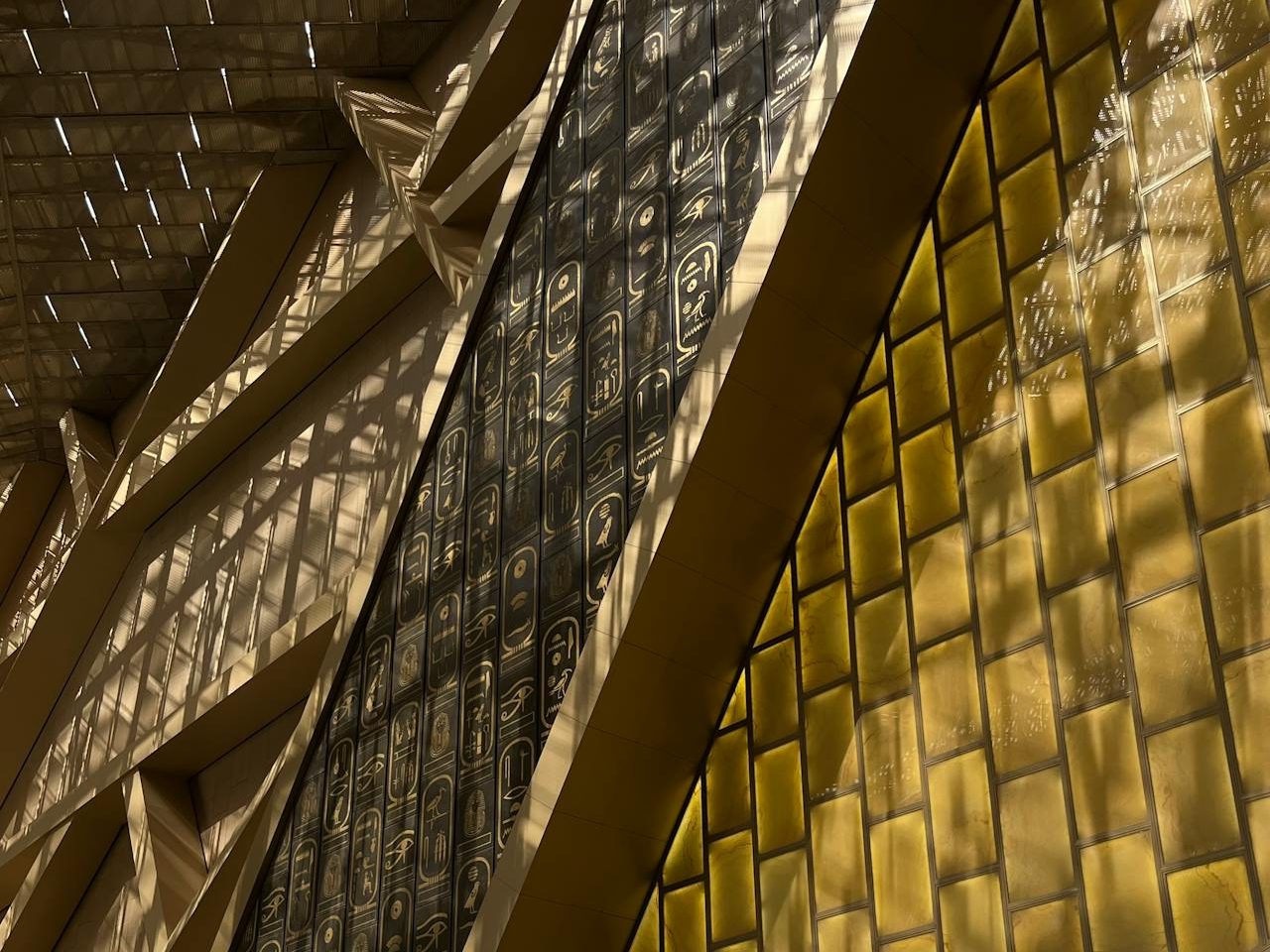
The Grand Hall not only provides an introduction into the museum’s theme, the history of Ancient Egypt, but also sets the tone for the architectural prowess the museum’s built presents. Encompassing a large open space, the Grand Hall not only functions as a center point from which you can access all of the museum’s facility, but also makes an unmistakable statement that revers from its high ceilings: This museum means business.
The Grand Staircase
From the Grand Hall, regular visitors move onto the Grand Staircase. This imposing staircase not only leads to the permanent exhibition galleries, but also functions as a gallery itself. As you climb the steps of the Grand Staircase, you will meet more than 60 ancient Egpytian artifacts that set the tone for the diverse collection to come. Some of the Grand Staicase’s treasures include statues of Pharaoh Hatshepsut and Akhenaten, statues of Egyptian deities and temple fragments.
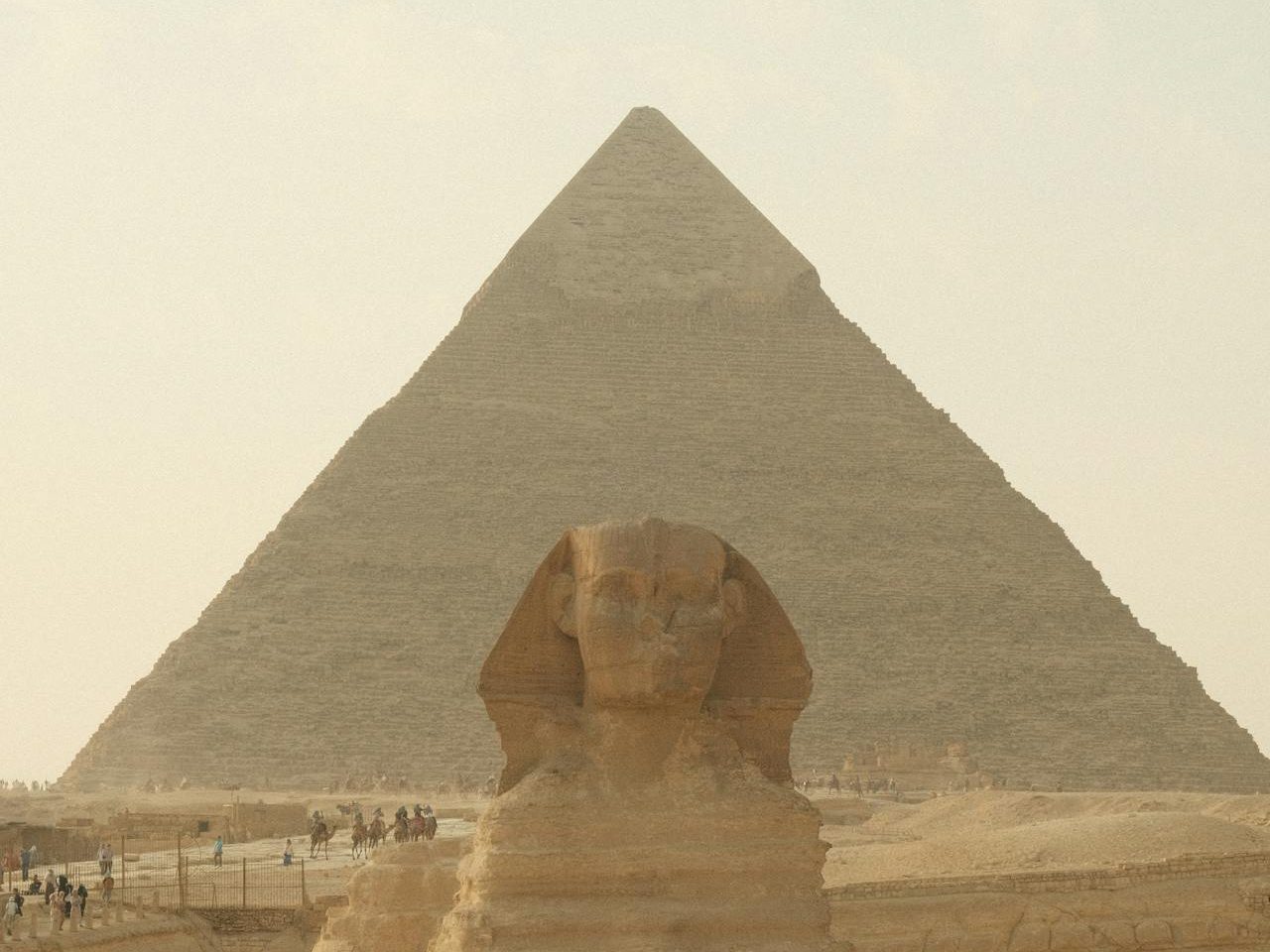
As you reach the crest of this six-story-staircase (or step off the accessible escalator), you are greeted with a magnificent, unobstructed panoramic view of the Giza Pyramids complex. This huge window-front is not only a great opportunity to rest from your climb up, but also your chance for a snapshot of Egypt’s most significant archaeological site.
The 13 Main Halls
From the panoramic view of the Giza plateau, you turn left to begin your journey through the history of Ancient Egypt. There are 13 permanent exhibition galleries that are commonly referred to as the 13 Main Halls. The Main Halls feature the bulk of the museum’s collection, some 24,000 items, in modern displays that are equipped with multi-language information boards and visual displays.
The 13 Main Halls include the following eras of the history of Egyptian civilization: prehistoric eras, the pre-dynastic eras, the early dynastic era, the Old Kingdom, the First transition, the Middle Kingdom, the Second Transition, the New Kingdom, the Third Transition, the Late Period and the Roman and Greek Periods of Egypt. Without a doubt, the main halls are of incredible quality and will leave any fan of egyptology and archaeology for the better part of their day.
The Tutankhamun Exhibit
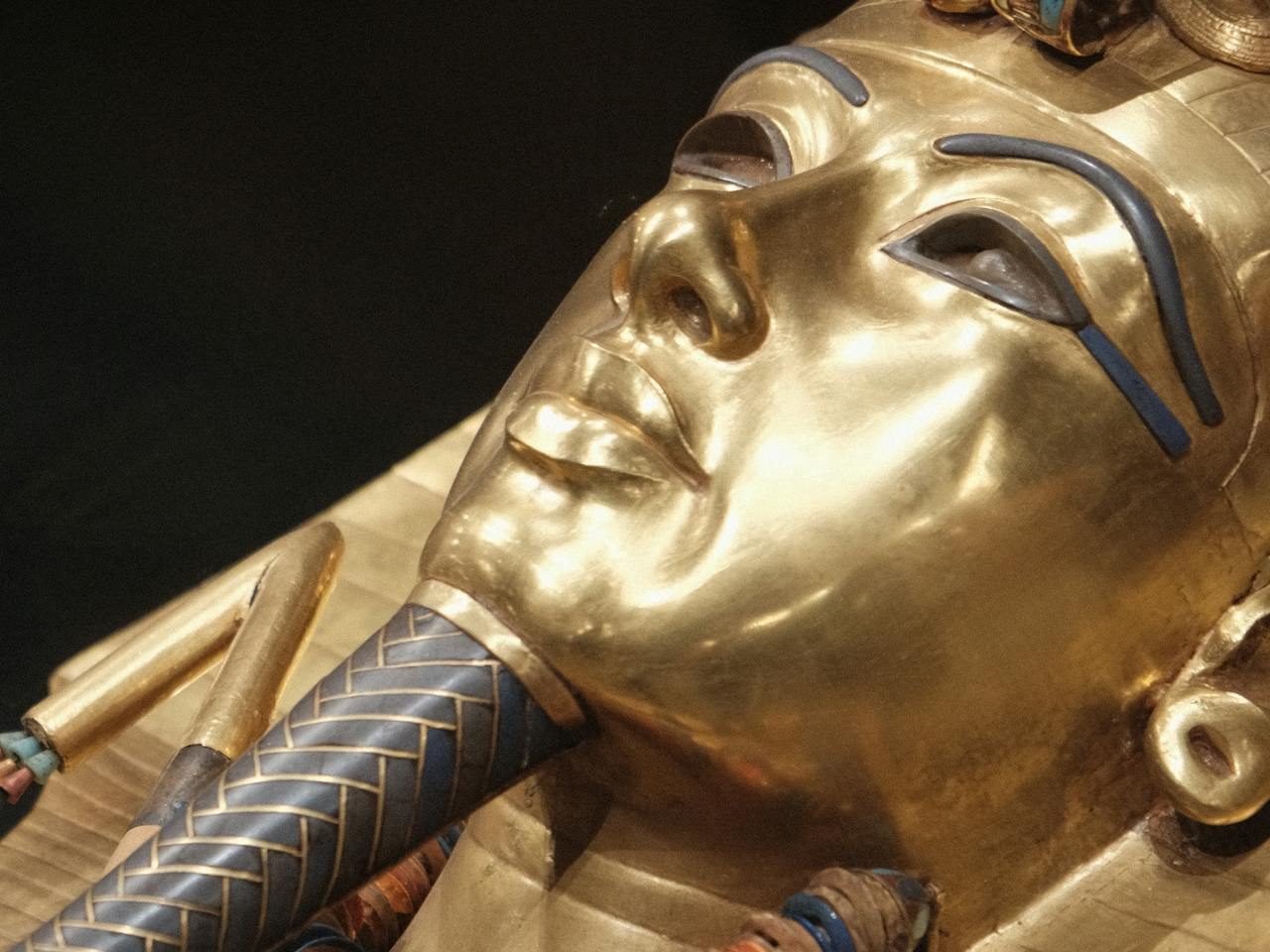
Apart from the 24,000ish items of the main exhibition, the Grand Egyptian Museum has also inherited an Egyptian all-timer, the mask of King Tutankhamun. Transferred from the old Tutankhamun exhibit in the (Old) Egyptian Museum, the mask of King Tutankhamun has found a new home in its very own exhibition in the new museum.
The Tutankhamun exhibit takes up two of the 13 main exhibitions halls, featuring not only the mask, but a whooping 5,398 items found in Tut’s tomb in the Valley of the Kings in Luxor. This is not only a massive improvement from the tucked-away and dark exhibit in the Tahrir museum, but a first-ever. For the first time, the collection of Tutankhamun is displayed in one place. Crucially, only his mummy will remain at its final resting place in the Vally of the Kings.
The Boats of King Khufu
A major reason for the construction of the Grand Egyptian Museum (GEM) was the desire to have a space where all of Egypt’s more sensitive archaeological treasures could be safely stored and displayed. The Boats of King Khufu are a great example of the success of this attempt.
The Khufu Ship Museum, a separate building on the grounds of the Grand Egyptian Museum, features two of King Khufu’s solar boats, some of the oldest boats ever discovered by archaeologists anywhere in the world. Moved from Giza Solar Boat Museum in 2021, the boats are now displayed in much better conditions and equipped with interactive displays.
The Children’s Museum
Talking about interactive display, the Grand Egyptian Museum also features a Children’s museum, catering especially to the museum’s youngest visitors. In the Children’s Museum, kids aged 6 to 12 can get up-close with Egyptian history through playful displays and interactive games. That being said, the Children’s Museum is far from a sideshow, covering 5,000 m2 (54,000 sq ft) of the museums total indoor space.
Temporary Exhibitions
Additionally, the museum holds plenty of space for temporary exhibitions. Four total halls are dedicated to non-permanent displays that will add to the museum’s main collections for months at a time. Some past special exhibitions held in the Grand Egyptian Museum include a Tutankhamun Immersive Exhibition, the CFW Dual Exhibition and the Traces of Egypt exhibition, displaying contemporary art. The temporary exhibition halls are poised to hold more displays in the future.
More Exciting Features of the Grand Egyptian Museum
Extending beyond the limits of a conventional archaeological museum, the Grand Egyptian Museum (GEM) has some more exciting features up its sleeves. From outdoor walkways, to official stores and restaurants, the architects and designers of this museum really thought about everything.
These are three more exciting features the museum has introduced along with its exhibits:
The New GEM Walkway
The so-called GEM Walkway allows visitors to stroll from the museum directly to the Giza Pyramids. Separated from the ebbs and flows of Cairo’s traffic, this walkway provides a safe and stress-free transition from exploring the museum to getting up-close with the pyramids on the Giza plateau. Bear in mind that tickets the to Giza Pyramids are to be purchased separately online or at the end of the GEM Walkway.
Official Souvenir Stores
Of course, the Grand Egyptian Museum also features its very own souvenir store. This official souvenir store, decked out with all sorts of quirky souvenirs depicting antiquities, hieroglyphs and the likes, present a present contrast to Cairo’s street souvenir markets. Here, you will find high-quality souvenirs, all carrying price tags and payment terminals that accepted all foreign cards.
High-Quality Cafés and Restaurants
Contrary to other museums you might have visited around the world, the Grand Egyptian Museum hosts a number of high-quality local restaurant and café chains rather than low-quality or international offers. Meticulously designed, the 30 North Café invites to a quiet coffee breaks and Zooba restaurant serves up artistic takes on classic Egyptian street food. The museum even hosts a fine dining restaurant with a view of the pyramids to be completed and opened soon.
Some feature of the museum not mentioned in our overview are the GEM Education Center, the Arts and Crafts Center, a number of fashion and jewellery stores as well as extensive outdoor gardens that invite visitors to leisurely walks.
We Visited the Grand Egyptian Museum Before the Official Opening: This is What We Think
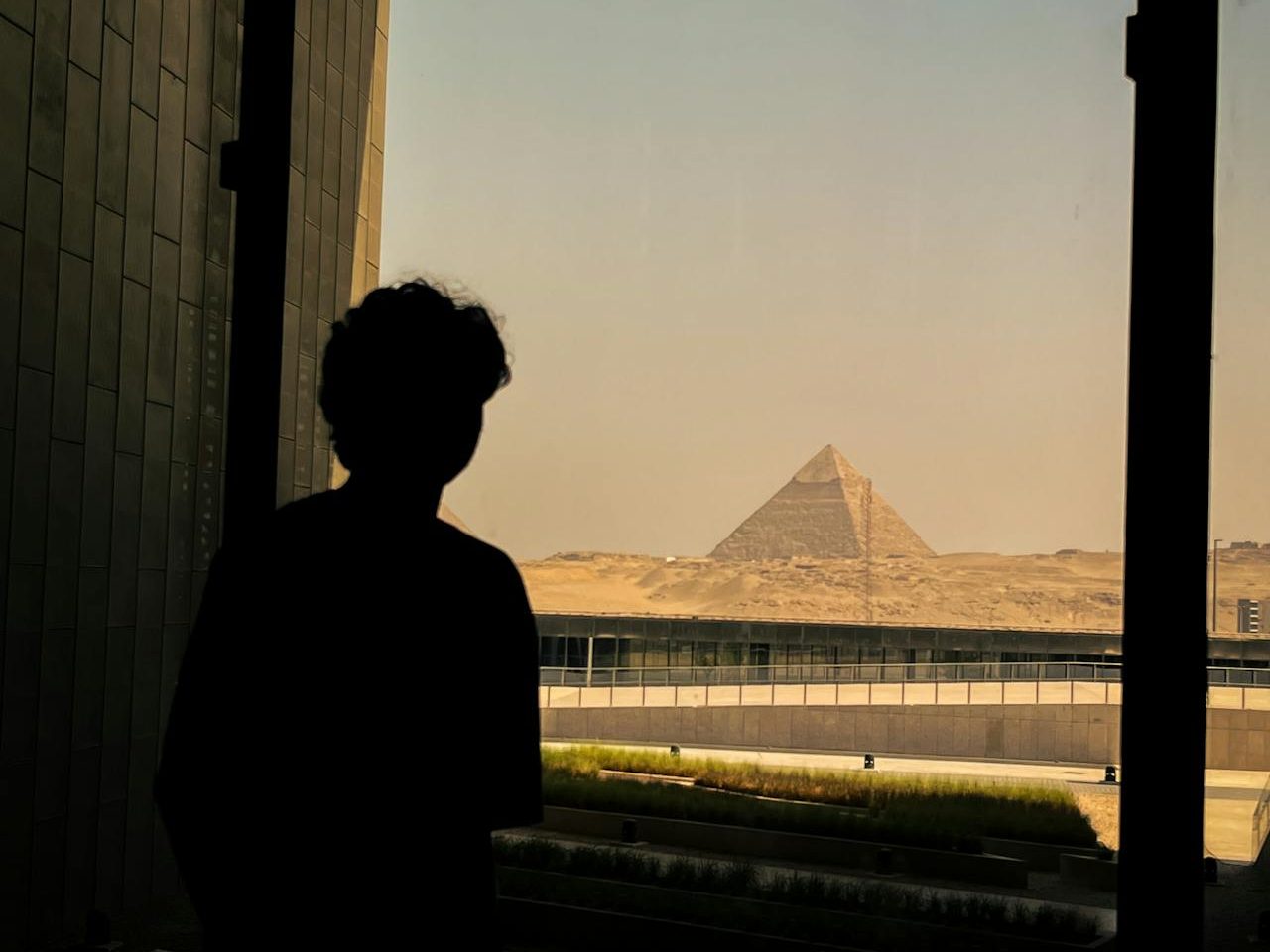
In October 2024, when the Grand Egyptian Museum was partially opened to the public, we seized our chance to see for ourselves what the Egyptian government had been pouring more than $1.2 billion. As some of the first visitors, we got the chance to check out the museum’s Grand Hall, the Grand Staircase and the 13 Main Halls, some of which were not opened yet.
Even though, the museum had not been opened fully yet, we couldn’t help but be impressed by the shier scale of the vast complex. From the entrance to the individual displays, every detail of the museum seems to be thought through.
The cohesive design and architecture are balm to the eyes and the main exhibitions with their state-of-the-art visual displays and multi-language, grammar-error-free information panels further run home the point: The Grand Egyptian Museum is one of the best, if not the best, museums of the world. It cements Egypt’s claim to its lost artefacts and will do wonders to the country’s booming tourism industry.
Since our visit in October 2024, the museum was fully completed and now includes the complete tomb of King Tutankhamun and the direct GEM Walkway to the Giza pyramids. So, is it worth its rather steep price tag of 1,450 EGP (26€ or $30) for foreign visitors? Yes, absolutely!
Planning to visit the Grand Egyptian Museum? Find out how to best spend four days in the Egyptian capital of Cairo.
The Bottom Line
The Grand Egyptian Museum (GEM) is finally open and it was well-worth the long wait. Twenty years after contraction began in 2005, the new largest museum of the world dedicated to a single civilization was officially opened on November 1, 2025, earning itself wide-ranging international praise.
Most importantly, though, the opening of the museum has sparked the return of some of Egypt’s lost artefacts such as a wooden coffin from the Late Period and a wooden beard from the Middle Kingdom from Belgium. While the yearned-for repatriation of the Rosetta Stone and the bust of Nefertiti still seem out of reach, the Grand Egyptian Museum has undoubtedly already done wonders for the international standing of Egyptian archaeology.
Frequently Asked Questions
Will the Grand Egyptian Museum ever open?
Yes, in fact, the Grand Egyptian Museum has been partially open since 2024 and held its official opening ceremony on November 1, 2025. The museum is now open to all national and international visitors.
Is Tutankhamun in the Grand Egyptian Museum?
Yes, the mask of Tutankhamun has been moved to the Grand Egyptian Museum. After a long stint at the (Old) Egyptian Museum at Tahrir Square, the mask is now display with over 5,000 items form Tut’s tomb in the Valley of the Kings in Luxor.
Is it worth visiting the Grand Egyptian Museum?
Yes, the Grand Egyptian Museum is absolutely worth visiting. Egypt’s newest flagship museum is not only one of the largest museums of the world, but also a great case study of how to display museum items in a modern and immersive way.
Is the Grand Egyptian Museum the biggest museum in the world?
The Grand Egyptian Museum (GEM) is claimed to be the world’s largest archaeological museum covering a total area of 500,000 m2 (5,400,000 sq ft). Upon completion, it surpassed the Louvre Museum in Paris and is now considered the largest museum of the world dedicated to a single civilization.


 waditribe.com