
The black Bedouin tent has become one of the most characteristic symbols of the Bedouin way of life. Its distinct look and ingenious design are representative of the Bedouin’s outstanding ability to adapt to their harsh desert environment. But what are they actually made of?

In this article, we’ll dive deeper into the history, design and evolution of the Bedouin tent. You learn what a Bedouin tent is made of, why a black tent is actually a good way to live in the desert and where you can stay in Bedouin tents today.
Key Takeaways
- Bedouin tents, also called beyt al-shar or nomad tents, are traditional shelters made from handwoven goat and camel hair, offering durability, natural insulation, and water repellency due to the animal hair oils.
- These tents adapt to desert conditions by expanding their weave in hot weather for airflow and contracting in cold weather to retain warmth, providing a cool and comfortable shelter.
- Modern Bedouin tents have evolved into stretch tents for large gatherings and may include reinforced frames and modern amenities, while still inspired by traditional designs.
- To experience authentic Bedouin culture and shelter, consider staying in a traditional Bedouin tent camp in Wadi Rum, Jordan, where you can learn about their heritage and experience Bedouin hospitality.
- Key Takeaways
- What is a Bedouin Tent? Definition
- A Quick Introduction into the History of the Bedouin Tent
- What are Traditional Bedouin Tents Made of?
- Modern Bedouin Stretch Tents & Co: How Have Bedouin Tents Changed over Time?
- Where to Stay in a Bedouin Tent
- The Bottom Line
- Frequently Asked Questions
What is a Bedouin Tent? Definition

The Bedouin tent, originally referred to as beyt al-shar (‘House of Hair’), is the primary means of housing of Bedouin cultures in the Middle East.
While there are several local differences between Bedouin tents, there are also many defining similarities of Bedouin tents from Morocco to Saudi Arabia that set them apart from the housing of other nomadic cultures such as yurts.
The most wide-spread type of Bedouin tent is the black Bedouin tent. The characteristic black tent consists of hand-woven black fabrics often pitched on a singular pole and fixed on the desert ground.
A Quick Introduction into the History of the Bedouin Tent
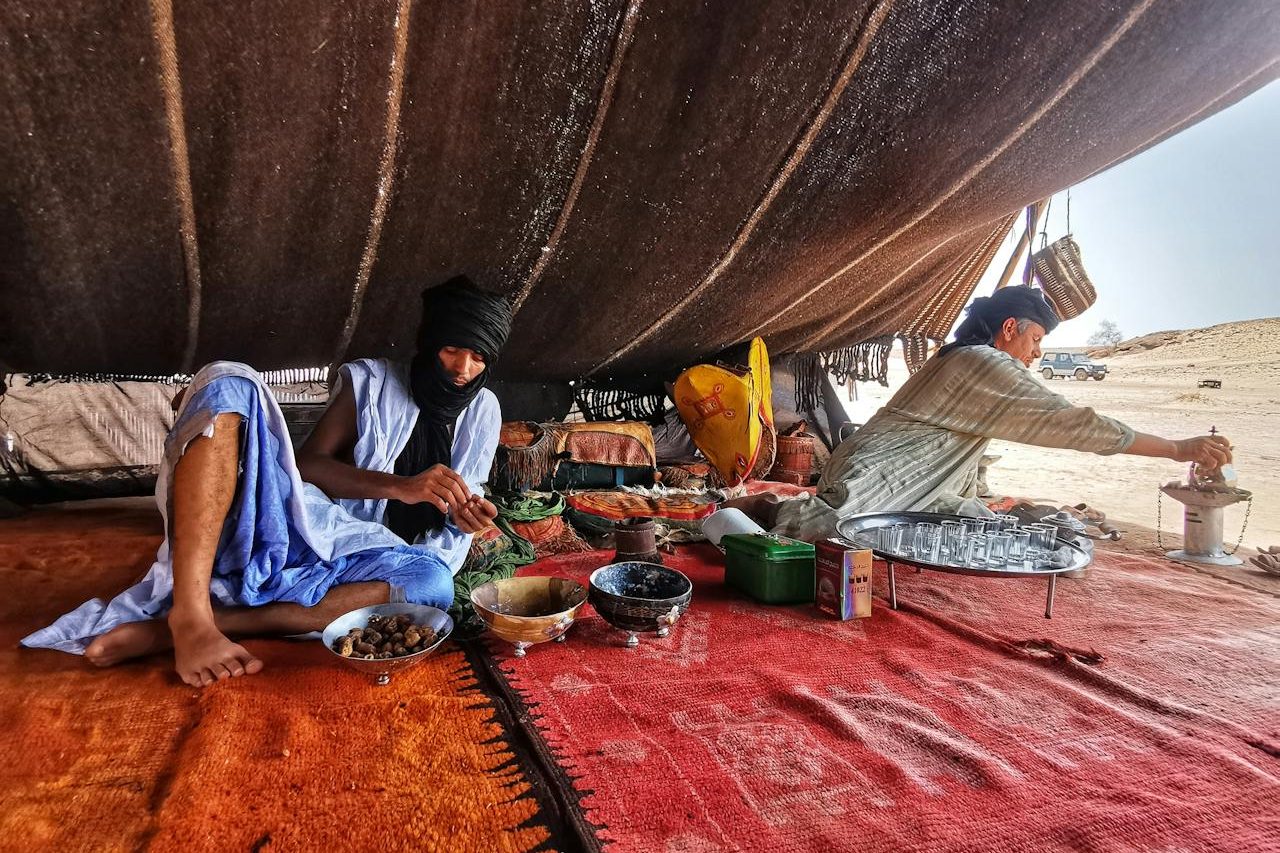
While we know with some certainty that the Bedouin first appeared as a distinct nomadic group in the Syrian steppe around 6,000 BCE, we cannot say for sure, when the custom of tent-building arose in Bedouin tribes. It is safe to say, however, that the Bedouin nomad tents are at least a couple of thousand years old.
The Bedouin tent formed an essential part of nomadic life in the desert, allowing for fast construction and deconstruction of shelter and easy transport with only fabric and a pole needed for pitching. Whenever needed, the Bedouin tent protected the user from heat, cold and rain in the desert climate.
Inside, the Bedouin tent not only comprised sleeping arrangements, but also cooking areas and social spaces for women and men, usually separated by cloth. The ground would be laid out with rugs and pillows. One Bedouin tent housed one family unit containing up to four adult family members plus children.
The significance of the Bedouin tent in Bedouin culture is also reflected in the linguistic order of Bedouin society. The Bedouin family unit not only lived in one tent, but was also commonly referred to as a beyt (tent), transforming the tent forming into each family’s social core.
What are Traditional Bedouin Tents Made of?
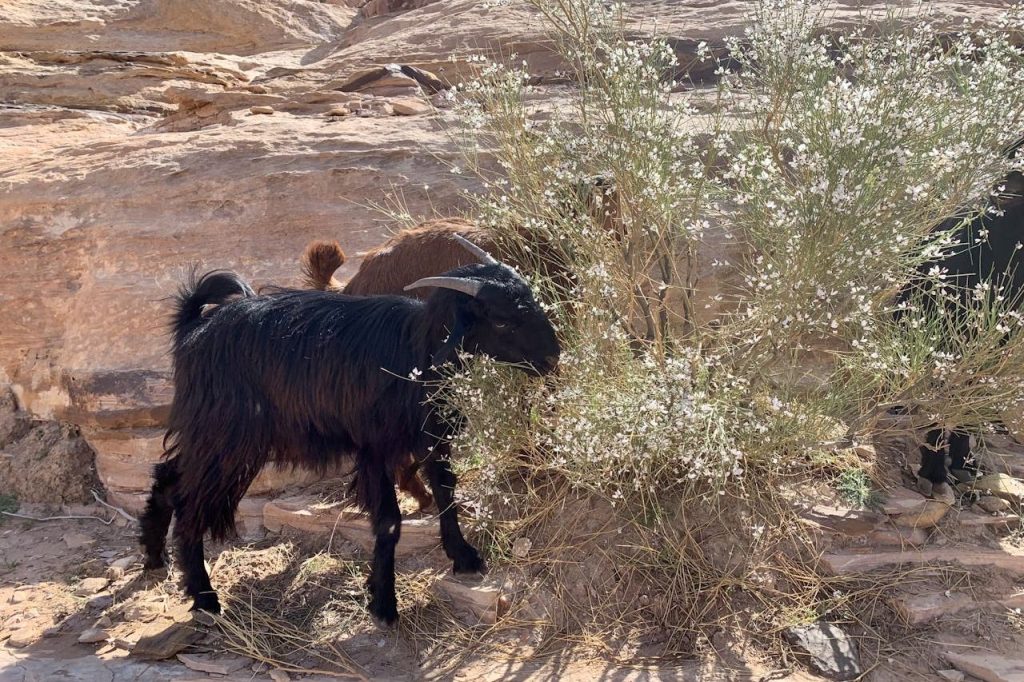
Traditional Bedouin Tents were made primarily out of two materials available to nomadic Bedouin herders: goat wool and camel wool. After Bedouin men shaved their livestock for wool, Bedouin woman created the tent characteristic tent fabric by hand-weaving it on a ground loom.
The handwoven fabric primarily bears two colours: black from goat hair and white/beige from camel hair. This not only creates a distinctive look, but also has a number of favourable properties. For one goat hair and camel are very durable, creating a reusable solution for ever-changing circumstances.
Under the scorching desert sun, the handwoven fabric allows fresh air to enter through its small gaps, that expand in the heat, allowing for more air circulation inside the tent and keeping it cool. When temperatures drop at night, the gaps in the fabric shrink again and act as a layer of insulation, conserving the warm air inside.
During occasional rains in the desert, the fabric also acts as a water repellent protecting the inhabitants from the elements. But how is it that a handwoven fabric with gaps keeps out the rain? The secret to its water-repellent properties lays in the natural oils in the animal hair forming a protective layer on top of the fabric.
Black works under heat – not only for tents. Find out, why it actually makes sense to wear black in the desert.
Modern Bedouin Stretch Tents & Co: How Have Bedouin Tents Changed over Time?
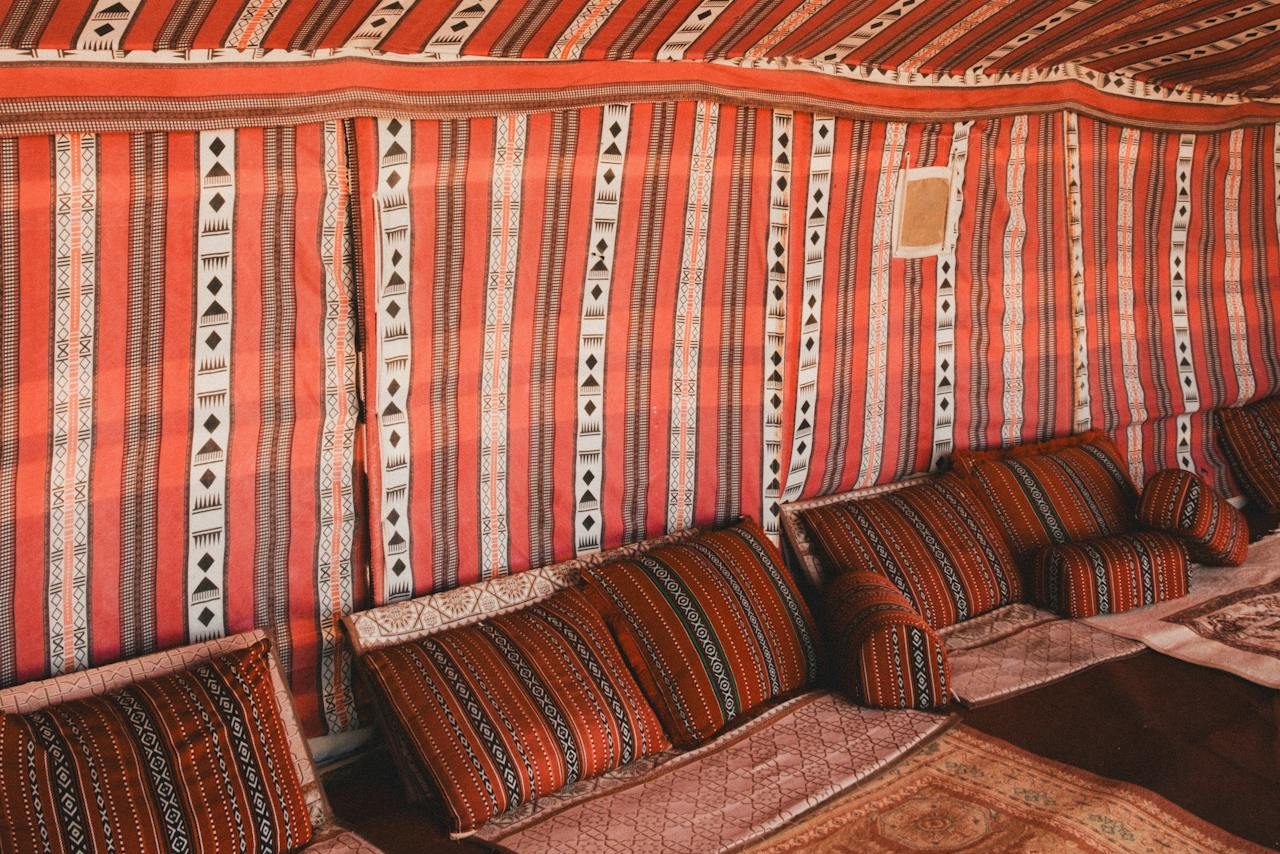
As the world keeps evolving and Bedouin life is affected heavily, the traditional Bedouin tent also take new shapes. While more and more Bedouins adapt a settled lifestyle and move to conventional houses, the Bedouin tent still plays a central role on festive occasions.
On festive occasions, the Bedouin tent re-appears as a modern stretch tent, a long Bedouin-style tent pitched on several poles, made for accommodating hundreds of guests at a time. While the look has changed over time, high-quality stretch tents are made by hand honouring Bedouin tradition. Therefore, Bedouin stretch tents sold online often have high price tags justified by their superior quality.
In spite of all challenges, however, many Bedouins prefer to preserve their culture and live in their historic homes at least part-time. In a modern Bedouin camp, you will still find the traditional black tents made from the same handwoven fabric, though some tents are now reinforced with wood or steel frames and equipped with windows and electricity, as nomadic movements becomes rarer and rarer.
The growing touristic interest in Bedouin tents has also given rise to a new kind of Bedouin tent that merges the centuries-old look with modern designs. Drawing heavy inspiration from from arabesque and orientalist design, these new luxury-style tent combine Bedouin tradition with Western ideas of oriental interiors and the elevated needs of tourists, such as full-blown beds and other amenities.
Where to Stay in a Bedouin Tent
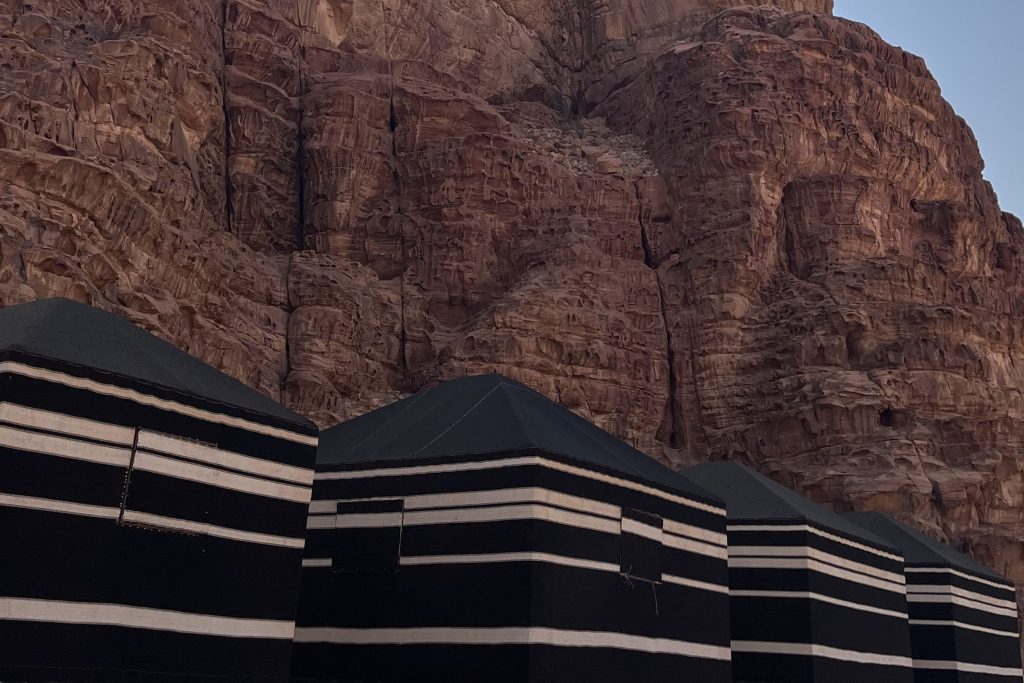
Are you curious what life in a Bedouin tent could have been like? From Morocco to Saudi-Arabia, there are many places offering authentic Bedouin experiences. One of those places is Wadi Rum.
In Wadi Rum, Jordan, Bedouins have made a living for thousands of years and have managed to retain their culture in the face of various challenges. Today, Wadi Rum’s Bedouin rely heavily on tourism, generating much needed income by allowing people to experience Bedouin life in their desert camps.
If you are looking for an authentic Bedouin tent experience in Wadi Rum, we advise you to steer clear of the hyped-up bubble tents and domes and to choose a traditional-style Bedouin camp instead.
The Bottom Line
The Bedouin tent easily captures the imagination of the Western mind. Evoking images of vast caravans traversing the Sahara desert to mirage-like tent cities in the middle of the desert withstanding their harsh environment, the black Bedouin tent is without a doubt a defining symbol of the Middle East.
And rightfully so. Creating a Bedouin tent is nothing short of a masterpiece. Made from the little materials that were available to the Bedouin, the traditional black tent combines flexibility, durability and protection from the elements under all conditions. Make a trip to Wadi Rum to join the Bedouin in one of their camps for a night or two – you won’t regret it.
Frequently Asked Questions
What is a Bedouin tent called?
The traditional Bedouin tent is called beyt al-shar in Arabic, meaning ‘house of hair’ in English. Its name refers to the fact that the tent’s fabric is made out of goat and camel wool.
What are Bedouin tents used for?
Traditionally, the Bedouin tent was used as a probable means of housing. Each Bedouin tent housed a Bedouin family consisting of up to four adult family members plus children.
Are Bedouin tents waterproof?
Yes, traditional Bedouin tents are said to be completely water repellent. This is due to the natural oils in the goat and camel hair that acts as a protective layer on top of the fabric keeping water out of the tent.

 waditribe.com