Aqaba is one of those places that people just sort of pass through without giving it much thought. They might arrive at Aqaba International Airport after catching a cheap flight or even spend the night on their way to Wadi Rum or Petra. But very few stick around to actually visit Aqaba.

Today, we will be asking a very simple question. Is Aqaba worth visiting? This is a question we asked ourselves a few years back when we were wrapping up our trip to the Wadi Rum Desert and planning our next days. This is what we learned a few days after.
Key Takeaways
- If you are flying into Aqaba or passing through, plan to spend at least one day exploring its beaches, markets, and historical sites such as Aqaba Castle.
- For a comfortable beach day, visit one of Aqaba’s private beach clubs or simply spend a night or two at one of the city’s luxury resorts.
- Take advantage of Aqaba’s dive schools to try snorkeling or scuba diving in the Red Sea and see its coral reefs and marine life.
- As of 2026, Aqaba is completely safe to visit and it works for all budgets. Whether you air headed to Wadi Rum or Petra, we recommend adding a stop in Aqaba.
Table of Contents
Where to Stay in Aqaba, Jordan? 3 Hotel Picks at 3 Price Points
Are you planning a stop in Aqaba City? These are our three hotel picks from budget stays to luxury hotels:
| Budget Hostels | Hakaia Community | from $ 17 per night | Click for rates & availability. |
| Boutique Hotels | Bratus Hotel Aqaba | from $ 83 per night | Click for rates & availability. |
| Luxury Hotels | InterContinental Aqaba | from $ 228 per night | Click for rates & availability. |
Aqaba 101: What You Need to Know About Jordan’s Only Port City
Aqaba is Jordan’s only city by the sea, located on the Red Sea coast. About 150,000 people live there. It’s a great place to enjoy warm weather all year and is close to famous spots like Petra and Wadi Rum, both about two hours away by car.
In Aqaba, you can find all kinds of places to stay, from budget hostels to luxury hotels with private beaches. Aqaba is famous for scuba diving and snorkeling, with colorful coral reefs and interesting dive sites like the Cedar Pride shipwreck. Shopping is cheaper here because it’s a special tax-free zone. Getting around the city is easy with a small airport, buses, taxis, and car rentals, making it simple to explore on your own.
Is Aqaba Worth Visiting? Yes, absolutely.
As you will have taken from the title of this post already, we think that Aqaba is absolutely worth visiting. But rather than vouching for a destination just for the hell of it, we actually have good reasons to do so.
These are three good reasons why Aqaba is worth visiting:
You Might as Well.

Okay, yes. We said it. The main reasons for many travellers to arrive to Aqaba are inbound flights to Aqaba International Airport or bus transfers forcing them to overnight in Aqaba before venturing on to Wadi Rum or Petra.
So, if you are headed to Aqaba anyways, why not make it a proper stop on your Jordan itinerary?
In Aqaba, you can find everything you need for a full day trip, all while breaking up the dusty walking and exploring you will have experienced in Petra and Wadi Rum.
For history, check out the Aqaba Castle (Aqaba Fort) built in the 16th century. For culture, head to Aqaba main souk in the city centre and later visit Hussein Bin Ali Mosque, featuring the largest dome of any mosque in Jordan. And for some proper relaxation, head to one of the beach club or book a boat trip out onto the Red Sea.
Psst: If you didn’t know, Aqaba is located in a Special Economic Zone, providing tax free shopping.
For Aqaba’s Beaches

Talking about beaches, Aqaba proudly stands as Jordan’s only coastal city, if you take the Dead Sea for what it is, a lake. The country of Jordan has a sea access of only about 26 kilometres (or 16 miles) along the fittingly-named Gulf of Aqaba. Aqaba is the only city along this short stretch of coastline and the only place in Jordan with real beaches.
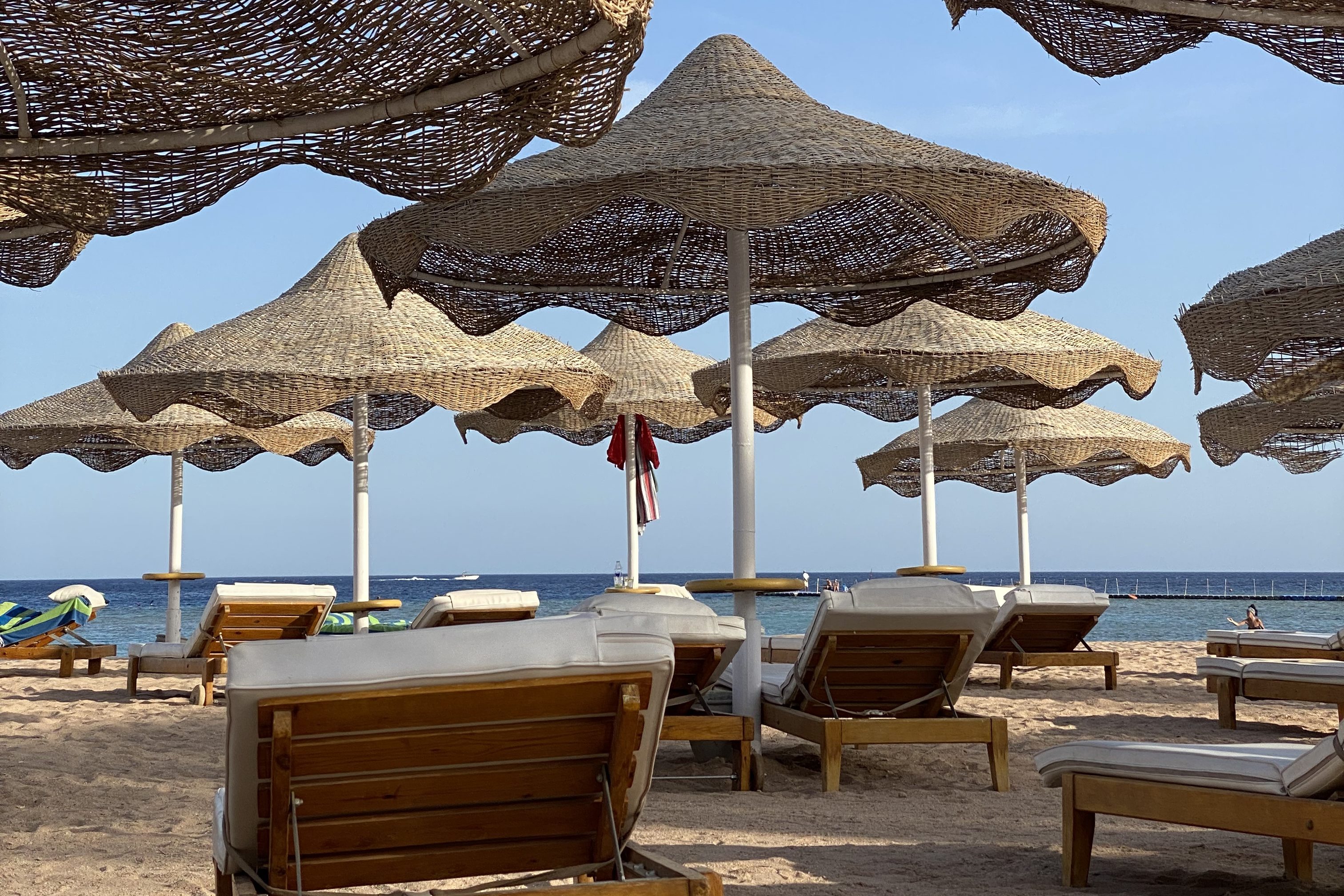
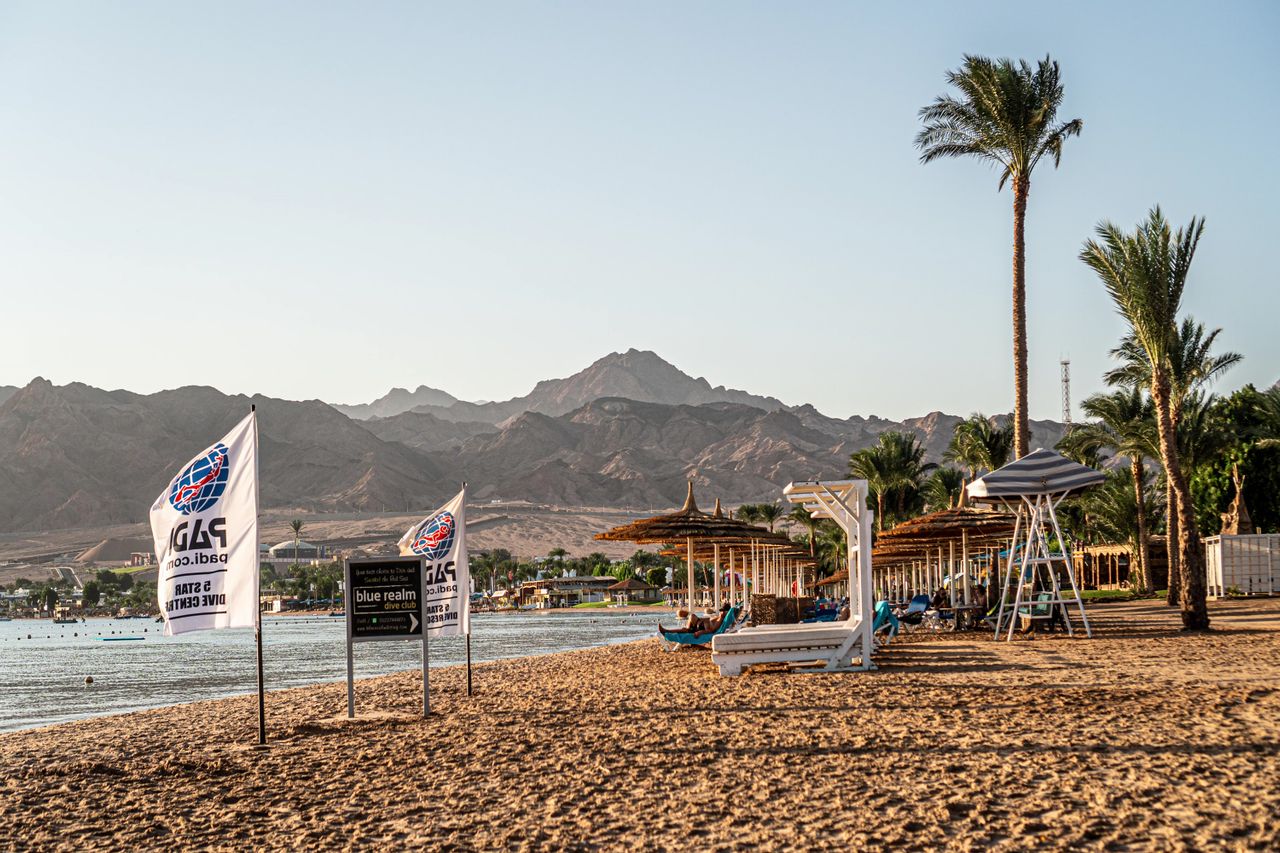
That is not to say that the beaches in Aqaba are not nice. In fact, the contrary is true. Aqaba’s beaches are truly stunning with yellow sands, blue waters and the sharp contrast of the mountains shooting up just a few kilometres inland.
Whether you want to relax for the day, go for a swim or dive, the beaches in Aqaba are your pick. If you are looking for free, public beaches, check out Al-Ghandour beach, the city beach in the center. For fewer crowds head out south by taxi to the South Beach.
For a more sophisticated experience, get a day pass at one of Aqaba’s many private beach clubs. For a small entrance fee, beach clubs such as Berenice Beach Club or The Beach Club, Tala Bay, offer swimming pools, private beaches, sanitary installations as well as food and drinks onsite. Just what you need for a day of doing nothing.
For Aqaba’s Dive Schools

The Red Sea is not only appealing to look at, but also appealing to look into. In fact, it is considered one of the best locations for coral reefs in the world along with Raja Ampat in Indonesia and the Great Barrier Reef in Australia.
So, if you are here already, why not use the opportunity to snorkel or dive in the Red Sea of Jordan. Along the beach and in beach clubs and hostels, you can easily rent snorkelling gear for the day. If you are looking for a more in-depth experience, you might want to opt for scuba diving instead.
In Aqaba, you will find plenty of dive schools offering both day trips and multi-day diving courses. And the best part? Most of Aqaba’s dive centers offer internationally recognised diving certifications such as PADI and AIDA and take you to some of the most stunning dive sites.
Our personal favourites in and around Aqaba are the Cedar Pride Ship Wreck, Japanese Garden, King Abdullah Reef and the Underwater Military Museum.
Is Aqaba Expensive? Depends on What You Make it
Visiting Aqaba can be both affordable and expensive. It really depends on what you make it.
For one, you can book yourself into a hostel, team up with other travellers to go on day trip, eat street food a the market and ate advantage of the free sites you get with the Jordan Pass. In Aqaba, the Jordan Pass gives you free entry to the Aqaba Castle and the Aqaba Museum.
If you are looking for more comfort, as we did, you can choose to stay at one of the city’s boutique hotels and enjoy an incredible level of hospitality. When checking into our hotel, we couldn’t believe how friendly the staff was! But more on that later. Getting around Aqaba by taxi is fairly affordable and beach clubs make the prefect destination for a relaxed day at the beach.
Finally, you can decide to splurge and treat yourself to an all-inclusive stay in Aqaba. Yes, you read right. Aqaba also has some all-inclusive resorts. Lining the beaches to the north and the south of the city centre, resort hotels like the Kempinski Hotel Aqaba, the Mövenpick Resort & Spa Tala Bay and the Hyatt Regency Aqaba Ayla Resort really give you a run for your money, in the best way possible.
So, Aqaba really is whatever you make it, from a simple $ 50 a day to a whopping $ 200+ a night.
Is Aqaba Safe to Visit? Yes, 100 %.
Last, but not least, we must talk about the security situation in Aqaba. After all, you are travelling to the Middle East, right? Well, luckily for us, the city of Aqaba does not watch the news as much as we do and it is as safe as any city in the world.
Despite regional tensions in the Middle East, Aqaba is safe to visit without a doubt. In fact, all tourist sites and major cities in Jordan remain safe to visit, even during the war between Israel and Iran. While we understand that the thought of travelling to a region at war might be unsettling, it is true that Jordan is not a part of this war and has not recorded as single casualty since its start.
As for the everyday security risks a traveller may face abroad, you may want to pay attention to the odd case of petty theft in the city center, although you are much more likely to be pickpocketed in Milan or Paris.
Also, remember to only wear bikinis on the beach and to dress modestly everywhere else. For visits to mosques, covers your shoulders and knees. Yes, men, too. Women additionally cover their head with a scarf or a veil.
How to Get to Aqaba, Jordan
Whether you are arriving to Aqaba via a direct flight from Europe or heading down south from Amman or Petra, you will want to know how to get to and from Aqaba.
These are the most common ways to get to Aqaba from. major cities and entry ports:
- From Aqaba International Airport (King Hussein International Airport): For a hassle-free transfer to the center, take a taxi. A taxi ride from Aqaba Airport should cost between around 10 JODs. Alternatively, you can take the airport bus to the 7th Circle and get a JETT Bus from there. For JETT bus, you can book tickets online. This will cost you around 15 JODs and it’s a great alternative, if you can’t find a taxi with a fair rate.
- From Aqaba Port (Egypt border): Technically, there are buses running from Aqaba Port to the city center, although it’s quite unreliable to book them in advance. The Aqaba Nuweiba ferry is often late and you’re better off winging it upon arrival. If you are lucky to catch a bus, you will either make it to the 7th Circle Station or all the way to the center. If not, try your luck with a taxi. The taxi fare from Aqaba Port to Aqaba City should be no more than 20 JODs.
- From Wadi Rum: From Wadi Rum Village, you can either catch the daily mini bus headed for Aqaba at 6 a.m. With a price of 5 JODs, this is the cheapest, but also the least reliable option. If you want to be sure that you will have a seat on your bus, book an online ticket for the JETT bus to Aqaba at 7 p.m. A single fare on this bus costs 15 JODs. If you are leaving anytime between 6 a.m. and 7 p.m., simply take a taxi to the city. The average taxi fare from Wadi Rum to Aqaba is 25 JODs.
- From Petra: Either take the daily JETT Bus from Petra Visitor Center to Aqaba Bus Station at 5 p.m. for 15 JODs per seat or take a local mini bus from Wadi Musa Bus Station. At Wadi Musa Bus Station, you can find mini buses leaving for Aqaba regularly. Simply ask for the right bus and wait for it to fill up. The bus ticket from Wadi Musa to Aqaba should cost around 8 JODs and the ride takes around 4 hours with several stop at smaller villages along the way.
- From Amman: For a direct transfer from Amman to Aqaba, take a JETT Bus from the 7th Circle Bus Station in Amman. A single fare from Amman to Aqaba is just 10 JODs and the ride takes around 4.5 hours. For a cheaper fare, take a mini bus from Mujahideen Station. A mini bus from Amman to Aqaba costs around 8 JODs. Of course, you can also take a flight from Amman to Aqaba, if you prefer a faster transfer. Alternatively, consider booking a rental car to make stops along the way.
Where to Stay in Aqaba

From budget hostels to all-inclusive resorts, you can find it all in Aqaba. We’ll share some of the best accommodation option in each price class with you and spill the tea on where we stayed when we visited Aqaba. This is where to stay in Aqaba:
Beach Hostels
For anyone on a budget, booking a few nights at one of Aqaba’s budget hostels should be a no-brainer. Luckily for you, saving money on accommodation, does not have to mean compromising on your experience. In fact, many hostels in Aqaba are super close to the beach.
Take Hakaia Community for example. This quaint hostel is located less than 10 minutes from the beach and starts at just $ 17 per night. If this is not a good deal, we don’t know what is!
Boutique Hotels
After visiting the Wadi Rum Desert, we decided to go for a more comfortable option in Aqaba and booked ourselves into the newly opened Bratus Hotel Aqaba – and we could not have been more impressed.
This boutique hotel is a little removed from the center, but outshines more central hotels with its stunning rooms, outstanding service and banging breakfast. If you are looking for a comfort stay in Aqaba for under $ 100 per night, the Bratus Hotel is your way to go.
Beach Resorts
If you are looking for some relaxation in between exploring Petra and Wadi Rum, you might like the InterContinental Aqaba.
This beach resort with half board options is far enough removed from the city for you to fully relax, but still close enough to go for an evening stroll in the evening. Additionally, it features its very own private beach, two swimming pools, a wellness center and unobstructed sea views – starting from $ 228 per night.
The Bottom Line
So, is Aqaba worth visiting? Yes, it absolutely is. In fact, we believe that it deserves to be a part of any Jordan trip. After all, it is much more than a short stopover after your flight or bus journey.
Aqaba has lots to offer, such as beautiful beaches, blue waters full of coral reefs and marine life, hundreds of years of history, bustling markets and some seriously top-tier hospitality. So, if you’re headed to Southern Jordan, what is stopping you from visiting Aqaba? Exactly, nothing.
Frequently Asked Questions
Is it worth going to Aqaba, Jordan?
Yes, Aqaba is absolutely worth visiting on your Jordan trip. The coastal city is Jordan’s only sea access and the country’s 7th biggest city. Aqaba offers a great contrast to the capital Amman with its city beach, coral reefs and luxury resorts.
Is Aqaba better than Amman?
In many ways, Aqaba is the complete opposite of Amman. It’s smaller, less visited and located right on the coast, rather than inland. While Amman is the capital of the country, Aqaba is the only Red Sea city and port of Jordan. In their own ways, both are worth visiting.
Is there anything to do in Aqaba?
Yes, there is lots to do in Aqaba. When you visit Aqaba, you can enter the Aqaba Castle (Aqaba Fort) and the Aqaba Museum for free with your Jordan Pass. Also, you can explore Jordan’s only coral reefs and the wreck of the Cedar Pride ship in the Gulf of Aqaba.
How long to spend in Aqaba?
The ideal length of stay in Aqaba is two or three nights. The city is a great destination for scuba diving and snorkeling and has some interesting sights to offer such as the Aqaba Castle. Beyond that, however, there is not too much to see and explore in Aqaba.

Hey! We are glad you are curious about travelling the Middle East.
We are Nancy & Elias.
Over four years of backpacking and digital nomading made us fall in love with the Middle East. We have lived on the Red Sea coast in Egypt, lived in a Bedouin Camp in Jordan and travelled 6+ Middle Eastern countries overland.
As we continue to travel, we share our battle-tested travels advice on this blog, from travel reports and transfer guides to accommodation recs and saving hacks.