
Coming to Wadi Rum, sooner rather than later, you will be confronted with the fact that there is such a thing as the Wadi Rum Protected Area. With the status of a protected area, Wadi Rum comes to you with a couple of responsibilities, too.

Today, we will take a look at what it means for Wadi Rum to be a protected area and what you should know about it before coming there.
Key Takeaways
- The Protected Area was established in 1997 and extended in 2002. It is under the management of the Aqaba Exclusive Economic Zone Authority and honoured as a UNESCO World Heritage Site for its immense cultural, natural and historical value.
- Visitors should respect the environment by avoiding littering and choosing authentic experiences like traditional Bedouin camps.
- Popular activities include jeep tours, hiking, rock climbing, and exploring ancient rock art and archaeological remains in the reserve.
- At Wadi Tribe, we offer all-inclusive desert experiences provided by local people, members of the Al-Zalabiah family, that emphasise cultural exchange and understanding.
- Key Takeaways
- 5 Things to Consider When You Visit Wadi Rum
- What is the Wadi Rum Protected Area?
- Notable Locations in the Wadi Rum Protected Area
- What to Do in Wadi Rum
- Where to Stay in Wadi Rum
- The Bottom Line
- Frequently Asked Questions
5 Things to Consider When You Visit Wadi Rum
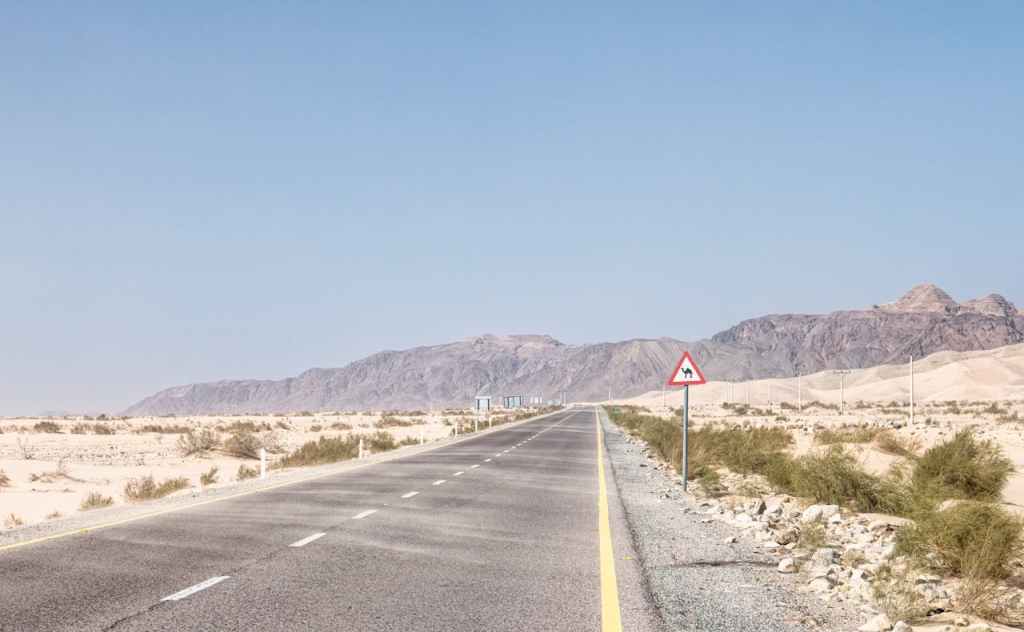
The Wadi Rum desert in the South of Jordan is officially demarcated as the Wadi Rum Protected Area.
Therefore, upon entering the Wadi Rum desert, there are some things you should know:
- Staying in the Wadi Rum Protected Area: The vast majority of desert camps is situated in the actual Wadi Rum Protected Area, while the minority of them is dotted along the north of the reserve. Staying in the reserve proper will provide you with a more immersive experience, but also comes along with some special responsibilities.
- What to do at the Wadi Rum Visitor Center: Entering the Wadi Rum Protected Area, you will pass by the Wadi Rum Visitor Center along Wadi Rum Road. There, you will be asked to pay a fee for your visit to Wadi Rum. The fee comes to 5 JD per adult, kids enter for free. The fee is waivered for Jordan Pass holders.
- Protect the Environment: While in Wadi Rum, a special responsibility comes to you to leave the place as you found it. Littering is an absolute no-go all throughout the desert. Unfortunately, trash has been a more common sight throughout the red desert landscape.
- Tradition over Looks: While there is a bunch of instagramable hotels in Wadi Rum, they are by far not the most authentic experience you can have here. If you are looking to connect more with the cultural heritage of Wadi Rum and minimise your environmental impact, a visit to a more traditional desert camp.
- Activities in Nature: Connecting with nature in Wadi Rum is an amazing activities away from the Wadi Rum Jeep Tours that have taken over the tourism infrastructure in Wadi Rum. While hiking or rock climbing in Wadi Rum, however, pay attention to minimising your environmental impact by avoiding excessive use of chalk for example.
What is the Wadi Rum Protected Area?

The Wadi Rum Protected Area, also know as the WRPA, is a dedicated protected area in Southern Jordan. It borders the Aqaba District in the West, the Jafr Sub-District in the East and Saudi-Arabia in the South.
The WRPA was established by the Jordanian cabinet in the year 1997. It was extended in 2002. Today, it spans some 74,200 hectares comprising most of what is considered to be part of the Wadi Rum desert. Since 2011, it can also proudly call itself a UNESCO World Heritage Site.
In practice, Wadi Rum functions as a special regulation area that is under the management of the Aqaba Special Economic Zone Authority. This authority provides an extensive management plan for the Wadi Rum Protected Area and oversees development in Wadi Rum that seeks to address a multitude of issues the location is facing today.
Among others, the WRPA’s management and development program seeks to address the growing impact of the tourism industry on the region with more and more jeep tours taking place in the desert. Moreover, it seeks to protect the varied desert landscape and archeological wealth in the desert such as rock art remains a priority for the governing authority. Altogether, the initiative aims at preserving the historical, natural and cultural resources of Wadi Rum.
Notable Locations in the Wadi Rum Protected Area

The WRPA, that is also colloquially referred to as the Wadi Rum Reserve, includes the bulk of Wadi Rum’s attractions as well as some other notable places that you will pass through without a doubt.
For better orientation in Wadi Rum, let us introduce you to the notable locations of the Wadi Rum Reserve.
Wadi Rum Visitor Center: The Entrance to Wadi Rum
It does not matter if your are coming to Wadi Rum from Amman, from Petra (Wadi Musa) or from Aqaba, if you are coming by car, taxi or bus, once you are coming to Wadi Rum, you will pass by the If you don’t pass by it when you visit Wadi Rum, you are not actually staying in the Protected Area.
At the Wadi Rum Visitor Center, you can do a couple of things such as paying your entrance fee, withdrawing money from the ATM, using your phone connection and asking for information about camps and jeep tours.
Every tourist entering thee WRPA is asked to pay an entrance fee of 5 JD. Kids are exempt from the fee. If you have purchased a Jordan Pass, you will not have to pay the ticket to Wadi Rum. Coming to Wadi Rum with an off-road vehicle will cost you an additional 25 JD.
At the Visitor Center, make sure to use the last ATM before the desert, if you do not have enough cash on hand yet. Wadi Rum Village itself does not have any ATMs, while most tour guides will ask for cash payments.
The same goes for the reliability of cell phone signal. If you are looking to send messages, the Visitor Center might well be the last place with reliable signal for you – depending on which provider you use and where exactly you are heading.
Any questions left? Find answers in our extensive guide on the Wadi Rum Visitor Center.
Wadi Rum Village: The Meeting Point
Wadi Rum Village is the center of human occupation in the Wadi Rum desert. On your Jordan trip, it will mark the beginning and the end of your desert experience as it is the main transport and resource hub of the Wadi Rum desert. All traffic bound for the desert stars from Wadi Rum Village first.
Arriving to Wadi Rum Village by whatever mode of transport, you will be dropped at the extensive free parking lot at the Wadi Rum Rest House. There, you will have the chance to stock up on food and drinks before meeting your hosts.
If time permits, a stroll through bustling Wadi Rum Village can be an interesting experience, too. Wadi Rum Village is the preferred place of settlement for the semi-nomadic Bedouin today. Besides housing extensively growing residential areas, it also hosts shops, work shops and gas stations that keep the Wadi Rum tourism infrastructure going. A combination of its rapid development and scarce resources has led to the village putting pressure on the region’s water supply among other resources.
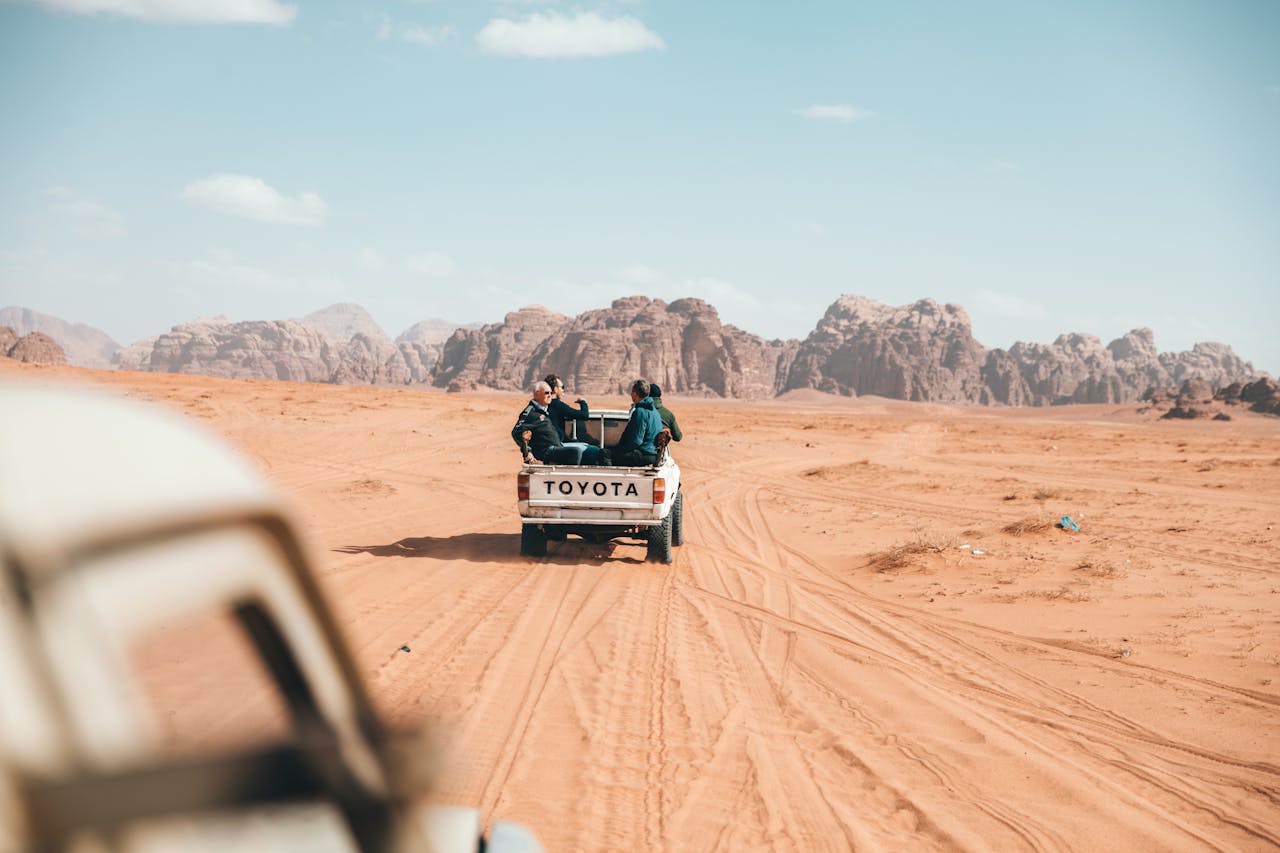
Upon booking your stay in a Bedouin camp beforehand, you will be asked to confirm your arrival time with your hosts. That is, because one of your guides will be waiting for you at Wadi Rum Rest House. From there, you will be invited to jump on the back of their pick-up truck that will take you into the heart of the Wadi Rum Red Desert.
Wadi Rum Desert: The Attractions
The red desert landscape of Wadi Rum is one of the defining factors of its environmental importance. Along with the sandstone mountains that are formed by rain and wind erosion, the red sand dunes now amazes millions of tourists every year.
Entering the red desert, however, you will also be reminded that to this day it also serves as a home for several Bedouin tribes. At Lawrence Spring, camels fill up on water before heading out on long desert walks.
Dotted around the desert in some distance to the touristic desert camps, you will find actual Bedouin settlements with their families and herds. These are the remants of the once predominantly Bedouin tribes that have existed here for centuries.
Besides, the steep sandstone cliffs bear witness to an even older civilisation, the Nabataeans, early inhabitants that used to call the desert their home. Their story persists in form of rock inscriptions along the narrow canyons as can be seen at Lawrence Spring and Al Khazali Canyon, which doubles as an ancient Nabataean archaeological site.
Most of the sights of the Wadi Rum desert are concentrated in the Northwest of the Wadi Rum Protected Area. This is also where you will find most desert camps. In the southern part of the Wadi Rum Protected Area you can find more desert camps, while the western section of the Wadi Rum desert is largely occupied.
Sights in the Red Desert
Some of the most notable sights of the red desert landscape include:
- Natural arches such as Small Rock Bridge, Umm Frouth Bridge and Burdah Rock Bridge. The latter can only be reached as part of a three-hour hike.
- Towering cliffs such as the Seven Pillars of Wadi Rum and Jebel Rum that are ideal for rock climbing.
- Narrow gorges with honeycomb weathering features such as Al Khazali Canyon and Abu Khashaba Canyon).
- Archeological remains by the early inhabitants of the desert such a the archaeological remains of the Nabataeans at Al Khazali Canyon showcasing the early development of life in the desert.
- High mountains such as Jebel Rum, Jebel Al Hash and Jabal Umm Ad Dami. The latter is Jordan’s highest peak at 1,854 meters.
- Historical sites such as Lawrence Spring and Lawrence House. Both sites are connected to T. E. Lawrence’s stay in the Wadi Rum desert during the First Arab Revolt.
There is even more to discover! Get to know 23+ iconic sites in Wadi Rum that you need to visit.
Wadi Rum Wilderness Zone: The Wildlife
Beyond the red desert, there is also a white desert where yellow sand dunes dominate and the rock formations have seen significantly more rain and wind erosion. This area is not frequented by tourists as much as it lacks the typical red martian look that most visitors come for. However, most of the region’s natural value is found here.
Also referred to as the Wadi Rum Wilderness Zone, the white desert of Wadi Rum, is significantly calmer than the touristically saturated red desert. Within it, there is a wealth of animal species such as the ibex that has become a rare sight in Wadi Rum.
Out of the two main parts of Wadi Rum, the Wadi Rum Wilderness Area qualifies most as a potential nature reserve, holding immense natural and cultural resources and not being affected by the downsides of tourism yet.
Today, jeep tours only touch upon the edges of the white desert, with few of them actually penetrating deep into it. That being said, at the edge and also at the center, the Wadi Rum Wilderness Area is home to some truly outstanding sights.
Sights in the Wilderness Area
Some of the most notable sights of the Wadi Rum Wilderness Area include:
- Jebel Umm Ad Dami which is Wadi Rum’s highest peak at over 1,854 meters.
- and some lesser known sights such as Wadi Sabet, Wadi Nuqra, Cow Rock and Jebel Al Hash.
What to Do in Wadi Rum

Wadi Rum holds immense natural and cultural values that are complimented with historical remnants and stories that capture the imagination. This makes it a playground for tourists looking to have a special experience in the desert.
Most commonly, tourists embark on jeep tours of the desert. They allow you to see some of the most notable sights of the desert in a short time frame while not succumbing to the unforgiving desert climate. However, the concept of the jeep tour is not without criticism as the particular car tracks are said to have an impact on the desert environment.
Nature lovers can get going on their own legs and embark on one of Wadi Rum’s challenging yet fun day hikes. The landscape character makes for a fun mix of scrambling and relaxed walking, all while offering stunning views at the summit. To take it a step further, you can also go rock climbing. Rock climbing in Wadi Rum is a growing attraction with Trad climbing taking the top spot among eco tourists.
Beyond sports and jeeps, Wadi Rum is a treasure trove for history lovers. Nabataean stone art is only one of many telling sings of history throughout the desert. More recently, T. E. Lawrence of Arabia has left his mark in the desert, leaving behind Lawrence Spring and Lawrence House. For more inspiration, check out our 22 Things To Do in Wadi Rum.
Where to Stay in Wadi Rum
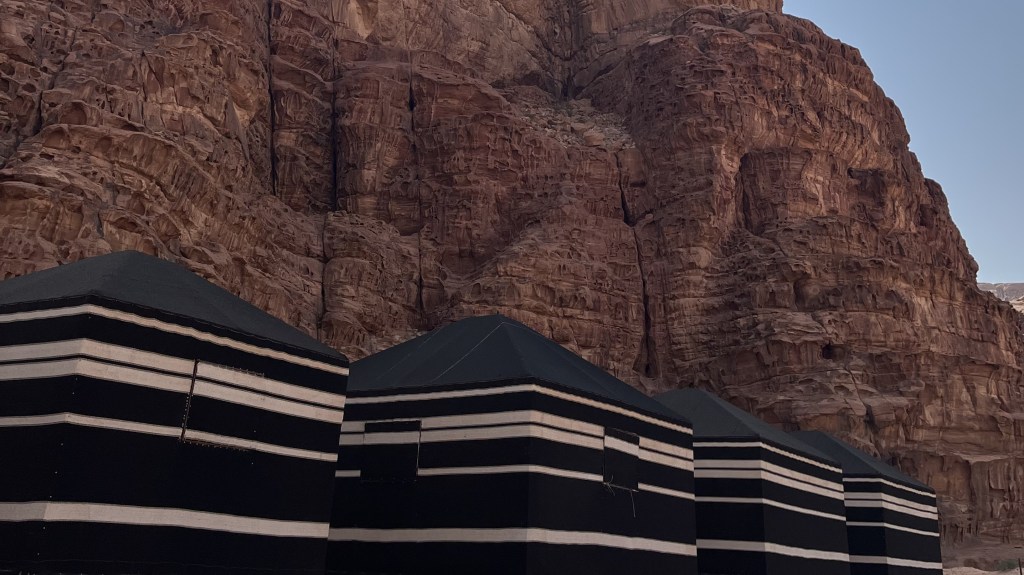
To pay respect to cultural traditions, we recommend you to stay in a traditional Bedouin camp during your time in the Wadi Rum desert. These camps aim at displaying Bedouins traditions while still providing for a comfortable stay.
One of the most prominent cultural traditions is the black tent made out of goat hair that you can sleep in now as a visitor. Adding to that, Bedouin camps usually provide an authentic Bedouin dinner experience showcasing their Zarb, a type of barbecue cooked in the desert ground.
While being somewhat of a cultural site, the typical traditional desert camp still has all of the comfort you would expect from a camp in the desert. There is running water in communal bathrooms, solar panels produce electricity and meals are served in the communal tent in buffet fashion.
The Bottom Line
Wadi Rum in Southern Jordan has been inscribed as a Protected Area because of its significant cultural property values. Later this value was also recognised by the UNESCO, making Wadi Rum a UNSESCO World Heritage Site. Mountains in dramatic cavernous weathering forms, Bedouins dwelling in the desert for centuries and rock art remains in the narrow valleys bear witness to its special character.
During your visit to Wadi Rum, remember to do your part in preserving to unique landscape and to support the local community by booking tours with local providers and staying at traditional Bedouin desert camps.
Frequently Asked Questions
Why is Wadi Rum so cheap?
Planning your trip to Wadi Rum, you will come across desert camps that are selling their tents at dirt-cheap prices even including breakfast and dinner. This is because the real winner for the local Bedouins is their occupation as tour guides. Staying in a camp, you are expected to book a Jeep tour, a hiking tour or a rock climbing trip to make it worth their while.
Is Wadi Rum worth it?
Yes, going to Wadi Rum is totally worth it. For us, Wadi Rum was one of the most unique destinations we ave ever been able to step foot on. The natural environment is simply like nothing your have ever seen before and the cultural resources such as Nabataean rock art and Bedouin life in the desert will have you in awe.
Is 1 day enough for Wadi Rum?
Coming to Wadi Rum for one day only is quite ambitious. While it is possible doing a jeep tour in the desert, we usually recommend a stay of two days so you can also explore the desert at your own pace. To experience Wadi Rum your way, you can opt to go hiking, climbing or even venture out to the white desert on the second day.
Why is Wadi Rum Protected Area?
The WRPA requires continuous monitoring because the area’s cultural landscape character is at risk of erosion over time. That not only includes the naturally eroding sandstone mountains, but also the unique cultural landscape character of Wadi Rum housing the semi-nomadic Bedouin peoples as well as ancient remains of the Nabataean people.
What is so special about Wadi Rum?
The Wadi Rum desert was first declared the Wadi Rum Protected Area and later a UNESCO World Heritage Site because of its varied desert landscape consisting of red sand dunes and sandstone rock formations and its immense cultural value with thousands of years of human occupation and trade shaping its face.
Can you wild camp in Wadi Rum?
While tour operators tend to encourage tourists to book camping trip with guides, it is allowed to camp wildly in Wadi Rum. For wild camping in Wadi Rum, it is important to follow the rules of the Wadi Rum Protected Area and to avoid closed areas outlined on the Wadi Rum map. Due to the weather conditions and remoteness, we only recommend wild camping in Wadi Rum to experienced nature enthusiasts.

 waditribe.com